Security | Threat Detection | Cyberattacks | DevSecOps | Compliance

Getting Application Security Back on the Rails

In its Interagency Report 7695, the National Institute of Standards and Technology (NIST) defined an application as “a system for collecting, saving, processing, and presenting data by means of a computer.” This broad term covers enterprise applications, consumer applications, and even phone apps. Security is important in all these types of applications, but the focus is not always the same. Let’s explore how below.

Executive Order Update: NIST Establishes a Definition for Critical Software and Outlines Scan Requirements for Software Source Code

On May 12, 2021, President Biden announced an executive order to improve the nation’s cybersecurity. The order, which outlines security initiatives and timelines, calls for the U.S. Department of Commerce’s National Institute of Standards and Technology (NIST) to enhance the security of the software supply chain.

The NIST Cybersecurity Framework: Security Checklist And Best Practices

The National Institute of Standards and Technology (NIST) is part of the US Department of Commerce and was founded in 1901. NIST was originally established to help the U.S. industry become more competitive with economic rivals and peers, such as the UK and Germany. NIST prioritizes developing measurements, metrics, and standards for technology used in different industries.

How to Apply the Risk Management Framework (RMF)

The Risk Management Framework (RMF) is most commonly associated with the NIST SP 800-37 guide for “Applying the Risk Management Framework to Federal Information Systems: A Security Life Cycle Approach,” which has been available for FISMA compliance since 2004. It was updated in December 2018 to revision 2. This was the result of a Joint Task Force Transformation Initiative Interagency Working Group; it’s something that every agency of the U.S.

What Is NIST SP 1800-27: Securing Property Management Systems?

In 2019, the hospitality industry suffered 13 percent of all data breaches, ranking third highest among targeted industries. It was two years later when NIST released SP 1800-27: Securing Property Management Systems to help hoteliers secure their Property Management Systems (PMS) and associated patron data.

NIST SP 800-172 (Formerly SP 800-171B) Release Couldn't Come at a Better Time

NIST’s timely new release of Special Publication (SP) 800-172 (formerly referred to in draft form as 800-171B) provides exactly what its title says, Enhanced Security Requirements for Protecting Controlled Unclassified Information: A Supplement to NIST SP 800-171. Yet it goes a step further to protect controlled unclassified information (CUI) specifically from APTs.

What Is the NIST Cybersecurity Framework?

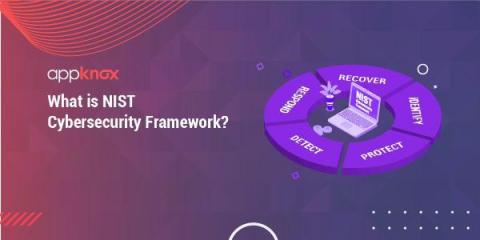
With cyber threats rapidly evolving and data volumes expanding exponentially, many organizations are struggling to ensure proper security. Implementing a solid cybersecurity framework (CSF) can help you protect your business. One of the best frameworks comes from the National Institute of Standards and Technology. This guide provides an overview of the NIST CSF, including its principles, benefits and key components.

NIST Cybersecurity Framework for Office 365

‍With more than a decade long history of businesses adopting cloud computing, less than one-third of the enterprises have a documented cloud strategy as per Gartner's estimation. Despite the increased migration to cloud security, we discussed the top cloud security risks that security experts are afraid of today.