Security | Threat Detection | Cyberattacks | DevSecOps | Compliance

The latest News and Information on Security Incident and Event Management.

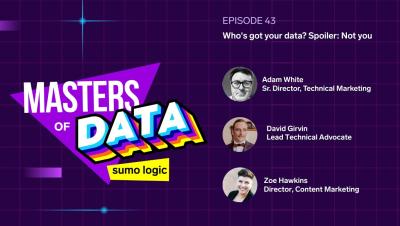
Ep 43: Who's got your data? Spoiler: Not you

In this episode of Masters of Data, we untangle the often-confused cousins of data sovereignty and data residency, because where your data lives and who actually controls it are two very different conversations. We dig into the real-world headaches facing multinational companies, from incident response teams locked out of sovereign data zones to the bureaucratic gymnastics that ensue when compliance meets practicality.
The cybersecurity nightmare of modern healthcare IT

Healthcare organizations are a primary target for cyberattacks. Outdated legacy tech runs rampant, and ransomware attacks are shutting down hospitals, forcing them to revert to paper records and cancel non-emergency procedures. The ripple effects extend beyond the targeted facility, overwhelming neighboring hospitals, putting lives at risk.

Understanding the Australian Information Security Manual (ISM)

The Essential Eight identifies the most critical cybersecurity risk mitigation controls, providing a set of minimum baseline strategies. As organizations work to mature the security posture, the Essential Eight maturity model offers some options that they can use. However, for organizations that need to implement a more comprehensive security program, the Australian Signals Directorate (ASD) published the Information Security Manual (ISM).

The New CISO Ep. 145 - Eric O'Neill | Lessons From a Spy Hunter: The Real Cost of a Breach (Part 1)

What does it feel like to stand in the smoking ruin of a ransomware attack? In this episode, Steve Moore is joined by former FBI undercover operative Eric O'Neill—the man who helped capture Robert Hanssen—to explain why modern cybercrime is just traditional espionage repackaged, and why the dark web has quietly become the world's third-largest economy.

What is the OWASP Top 10 Agentic AI

Published by the Open Worldwide Application Security Project (OWASP) in 2025, the OWASP Top 10 for Agentic Applications 2026 identifies security risks that organizations need to consider when implementing agentic artificial intelligence (AI) systems. The guide focuses on how threat actors can exploit agentic systems in new ways and on the associated risk mitigation strategies.

AI SOC vs. white box AI: Why black boxes fail in the real world

There’s a growing wave of “AI SOC” startups promising autonomous everything. They’ll triage your alerts, investigate threats, and even run your playbooks. Push a button, let the machine handle the mess, and enjoy the magic. It sounds great until the moment something breaks. Then everyone, not just security, asks the same question: “What exactly did it do?” And that’s when these systems turn into a liability.

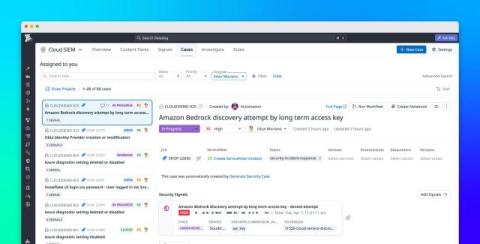
Turn security signals into structured investigations with Case Management in Datadog Cloud SIEM

Security operations teams manage a high volume of signals, often across multiple tools. Analysts may triage detections in one system, document progress in another, and coordinate remediation elsewhere. As context becomes fragmented, response times slow and the risk of missed threats increases.

Logs & Lattes: Episode 6 - How Small SOC Teams Stop Drowning in Alerts

Lean security teams don't need a smaller version of an enterprise SOC. They need a different approach entirely. Graylog Director of Product Management, Rich Murphy, joins Logs and Lattes to explain why 2-to-4-person security teams are the most underserved segment in cybersecurity and what needs to change.

Elastic + Azure: The scalable security stack driving better outcomes

Discover how implementing Elastic helped drive measurable improvements across key security metrics, from performance to client satisfaction. In this video, Tyler Hopperton, Chief Information Security Officer at Coretek, shares how a flexible, data-driven approach to cybersecurity, combined with Elastic and Microsoft Azure, enables teams to better understand, normalize, and act on critical security data. Learn how this partnership is helping modern organizations adapt to evolving threats and build more effective security operations.