Security | Threat Detection | Cyberattacks | DevSecOps | Compliance

Featured Post

Why cloud native apps need cloud native security

A cloud native approach to infrastructure and application development enables simplification and speed. Many of the traditional tasks involved in managing and deploying server architecture are removed, and high levels of automation deployed, making use of software-driven infrastructure models. Applications can be deployed at scale, be resilient and secure, while also allowing continuous integration technologies to accelerate development and deployment. Cloud approaches are set to dominate the future, most authorities agree: according to Deloitte, for example, global cloud spending will grow seven times faster than overall IT spending until at least 2025.
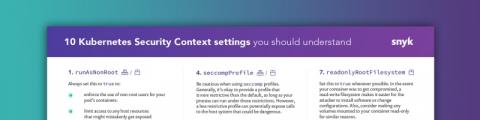
10 Kubernetes Security Context settings you should understand

Securely running workloads in Kubernetes can be difficult. Many different settings impact security throughout the Kubernetes API, requiring significant knowledge to implement correctly. One of the most powerful tools Kubernetes provides in this area are the securityContext settings that every Pod and Container manifest can leverage. In this cheatsheet, we will take a look at the various securityContext settings, explore what they mean and how you should use them.

Forrester TEI study: Sumo Logic's Cloud SIEM delivers 166 percent ROI over 3 years and a payback of less than 3 months

We are seeing a renewed focus on accelerating digital transformation projects across business ecosystems and workflows within our customer base. These projects are enabling key business outcomes and this organizational transformation has given security and IT leaders the catalyst and opportunity to modernize security operations while eliminating on-premises debt.

A CISO's View of SASE

Traditional security programs were predicated on protecting the typically internally hosted technology infrastructure and the data within that environment. This led to an ecosystem composed of numerous discrete tools and processes all intended to detect adversaries and prevent harm. It included a multitude of controls spanning network and infrastructure security, application security, access control, and process controls.

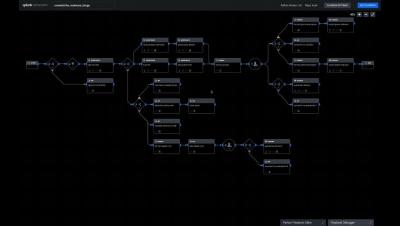
Splunk SOAR Playbooks: Crowdstrike Malware Triage

The combination of Crowdstrike and Splunk Phantom together allows for a more smooth operational flow from detecting endpoint security alerts to operationalizing threat intelligence and automatically taking the first few response steps – all in a matter of seconds. In this video, distinguished Phantom engineer Philip Royer will walk you through an out-of-the-box playbook that you can set up in Phantom to triage malware detections from Crowdstrike and automate a variety of responses based on an informed decision by an analyst.

Putting the Sec in DevSecOps

Whether a seasoned professional or a fresh computer science grad, every developer has his or her stressful moments of trying to dig through scanning results to mitigate or remediate a vulnerability. Since you work at the speed of “I need this yesterday,” it’s a hassle to slow down and fix flaws or even stop to rewrite code entirely. Effective AppSec today is about executing essential application security (AppSec) tests as you’re writing code.

Veracode Wins IT Central Station's 2021 Peer Award for AST

Veracode was recently named the winner of IT Central Station’s 2021 Peer Award for application security testing (AST). Winners were chosen based on reviews from verified customers to help prospective buyers make well-informed, smart business decisions. “Receiving positive feedback from our customers on the leading technology review site for cybersecurity, DevOps, and IT is a true testament to our products and services,” said Mark Bissell, Chief Customer Officer at Veracode.

On-prem or Cloud? Lessons from the Microsoft Exchange Attack

As I’m writing this blog, malicious actors are actively exploiting vulnerabilities in the Microsoft Exchange Server software. These were zero-day exploits, which means that even organizations that were diligent in their patching were vulnerable. So far the estimates are that more than 60,000 organizations have been compromised.

How FIM Is More Than Just About Maintaining Compliance

The purpose of every security team is to provide confidentiality, integrity and availability of the systems in the organization. We call it “CIA Triad” for short. Of those three elements, integrity is a key element for most compliance and regulations. Some organizations have realized this and decided to implement File Integrity Monitoring (FIM). But many of them are doing so only to meet compliance requirements such as PCI DSS and ISO 27001.