Westcon-Comstor announces new EMEA distribution agreement with Proofpoint
New collaboration delivers Proofpoint's email and cloud security solutions to channel community, with phased rollout across regions in EMEA.


Trustwave MailMarshal has received a major upgrade to version 10.0.5 adding proprietary technologies to greatly increase the security tool’s ability to detect phishing emails, spam and malicious URLs. MailMarshal is already highly effective against phishing, but the new version’s phishing detection ability is boosted by being able to detect 40% of previously ‘hard to detect' samples the addition of these new capabilities.
If you’ve been following my suggestions in this series, then your SaaS sharing configuration now protects sensitive information and your IaaS/PaaS access controls accurately follow the principle of least privilege. Of course, that doesn’t mean you’re done! We must now tame the giant of all file-sharing beasts: email. An email is probably the worst way to share files because there’s no way to limit who sees the file after it is sent.
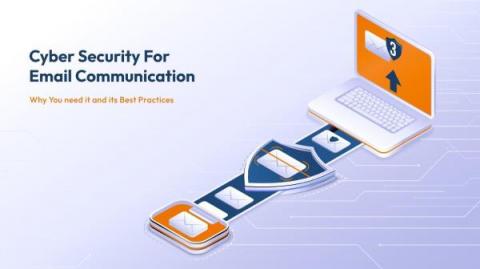
Email is a universal means of electronic communication used by millions of people. The organization uses them to communicate with the co-employees, suppliers, partners, and customers. It also acts as a suitable medium for cybercrimes to initiate an attack that causes severe damage to the organization. It is estimated that 90% of cyber-attacks emerge from emails. Effective cyber security practices will help the organization prevent attacks and protect the organization.
Can you remember your first email? Either sending one, or receiving it? I certainly remember explaining to people what email was, and I also remember someone telling me they could live without their email server for “about a month before it becomes a problem”. Can you imagine that now? A month without email?
Kroll has observed an increase in two social engineering tactics known as “vishing” and “smishing.” These tactics use phone calls, voice altering software, text messages and other tools to try to defraud unsuspecting people of valuable personal information such as passwords and bank account details for financial gain. These types of attacks use similar techniques to the common infection vector, phishing.
With how much of our personal and professional lives take place online, it becomes more important each day for us to understand our vulnerability to cyberattacks. Cybercriminals target emails, domains, and accounts in order to impersonate identities and scam consumers and businesses alike. In 2021 alone, email spoofing and phishing increased by 220% and caused $44 million in losses. It is crucial to employ defenses to protect against these attacks.
A few months ago, we reported on an interesting site called the Chameleon Phishing Page. These websites have the capability to change their background and logo depending on the user’s domain. The phishing site is stored in IPFS (InterPlanetary File System) and after reviewing the URLs used by the attacker, we noticed an increasing number of phishing emails containing IPFS URLs as their payload.
As businesses continue to adopt cloud integration and remote work increases, security teams are facing more visibility challenges as well as an influx of security event data. There is more need to understand the threats than ever before, as the threat surface area increases, and tactics increase. Cyber threats are becoming more sophisticated and occurring more frequently, forcing organizations to rely on quality threat detection to protect their data, employees, and reputation.