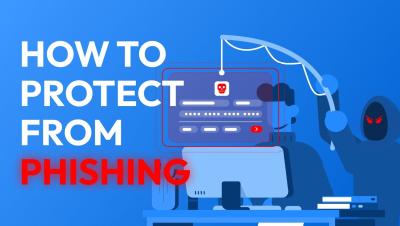
Netskope Threat Labs is tracking phishing campaigns that are abusing several free cloud services to host their websites and collect user information. These campaigns host their phishing sites in AWS Amplify which is available to free-tier users. Some phishing campaigns also abuse Telegram and Static Forms to collect users’ credentials. These phishing attacks aim to steal banking, webmail, and Microsoft 365 credentials, as well as victims’ card payment details.
Since December 22nd, 2022, there has been an increase in malware sent via Phishing emails via a OneNote attachment. As with most phishing emails, the end user would open the OneNote attachment but unlike Microsoft Word or Microsoft Excel, OneNote does not support macros. This is how threat actors previously launched scripts to install malware.
Using a new twist to bypass detection from security solutions, cyber attacks are now employing what will be construed as a benign image whose malicious intent can’t be traced. Threat actors need some means of getting a user to engage with malicious content – whether an attachment, link, or phone call, there needs to be some content within an email that provides the victim user with their next step.
Business Email Compromise (BEC) is a targeted cyberattack in which a cybercriminal poses as a trusted figure, such as the CEO of a company, and sends out an email to specific individuals requesting sensitive information or money. BEC attacks involve research and preparation in order for the cybercriminal to develop a convincing impersonation. Continue reading to learn more about business email compromise and what organizations should do to prevent this type of attack.
As they say, when it rains, it pours. Recently, we observed more than 3,000 phishing emails containing phishing URLs abusing services at workers.dev and pages.dev domains.
A phishing campaign is targeting the tourism and hospitality industries, according to researchers at Votiro. “In this instance, the hacker booked a room at an international hotel and submitted a request for the hotel to get in touch with them immediately via WhatsApp about an urgent issue,” the researchers write. “Once the hotel employee engaged the customer over WhatsApp, the hacker responded with their request.
Australia officially launched their National Anti-Scam Centre this week. With more than AUD $3.1 billion lost each year, Australians need support. With representatives from the banks, telecommunications industries and digital platforms, the intent of the center is to identify methods to disrupt all kinds of scams and reduce scam losses. While I completely support this initiative, it would be remiss of me not to highlight that the prevention of scams is perhaps as important as the cure.