Security | Threat Detection | Cyberattacks | DevSecOps | Compliance

How to Establish a Culture of Secure DevOps

We’re constantly told to “Shift Left” and that Secure DevOps is the only way to have confidence in your cloud native applications. But speaking to end-users and industry colleagues, it’s clear that there are some major challenges in adopting Secure DevOps. If we read our history books, we know that DevOps wasn’t successfully adopted by buying tools, and a true cultural movement towards DevOps wasn’t established by having a small dedicated team of DevOps specialists.
Kubernetes security policy design: 10 critical best practices

In this blog post, I will be looking at 10 best practices for Kubernetes security policy design. Application modernization is a strategic initiative that changes the way enterprises are doing business. The journey requires a significant investment in people, processes, and technology in order to achieve the desired business outcomes of accelerating the pace of innovation, optimizing cost, and improving an enterprise’s overall security posture.

Managing Node.js Docker images in GitHub Packages using GitHub Actions

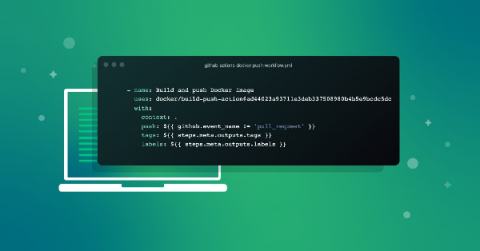
If you’re doing open source development today, chances are high that you’re active within the GitHub community — participating in open source projects and their repositories. A recent addition to the GitHub ecosystem is GitHub Packages, which was announced back in 2019 and is now receiving even more updates with the general availability of the GitHub Packages container registry.

Advanced Kubernetes Pod to Node Scheduling

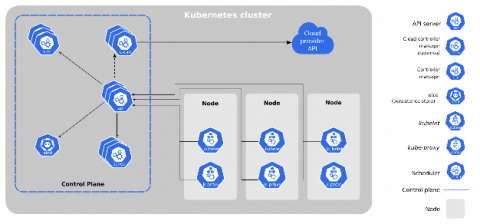
In Kubernetes, the task of scheduling pods to specific nodes in the cluster is handled by the kube-scheduler. The default behavior of this component is to filter nodes based on the resource requests and limits of each container in the created pod. Feasible nodes are then scored to find the best candidate for the pod placement. In many scenarios, scheduling pods based on resource constraints is a desired behavior.

Hardening AWS EKS security with RBAC, secure IMDS, and audit logging

Misconfigurations in infrastructure as code (IaC) can be just as dangerous as vulnerabilities in code. Small mistakes in configuration can lead to the sensitive data being readable on the internet, or private endpoints and dashboard accessible to the anonymous users and abused as the initial point of compromise. Recent security research findings indicate the rise in malware targeting the Kubernetes platform which showcases the need for secure configuration.

Tips and best practices for building secure container images

When you start scanning your container images, it can be disconcerting to discover that you have large numbers of vulnerabilities. Below is a scan I did last week on a vulnerable node image that I built. While a fairly extreme example, you can see that this image out of the box is showing as having over 800 vulnerabilities in it.

How Dockershim's Forthcoming Deprecation Affects Your Kubernetes

Container orchestration platform Kubernetes announced in December 2020 that its third and final release, Kubernetes v1.20, would deprecate dockershim and subsequently Docker as a container runtime. This deprecation has brought multiple changes that admins must be aware of and accordingly respond to.

Detecting new crypto mining attack targeting Kubeflow and TensorFlow

Microsoft has discovered a new large-scale attack targeting Kubeflow instances to deploy malicious TensorFlow pods, using them to mine Monero cryptocurrency in Kubernetes cluster environments. Kubeflow is a popular open-source framework often used for running machine learning tasks in Kubernetes. TensorFlow, on the other hand, is an open-source machine learning platform used for implementing machine learning in a Kubernetes environment.

Kubernetes Quick Hits: Don't run with privileged:true in you Kubernetes SecurityContext

In this episode of our Kubernetes Quick Hits video series, Eric Smalling–Sr. Developer Advocate at Synk– talks about privileged mode containers and why, for the vast majority of us, it’s simply a bad idea as well as some ideas for finding and preventing its use. Privileged mode is part of item number five from our recently published cheatsheet, 10 Kubernetes Security Context settings you should understand, check it out and start securing your Kubernetes application deployments today!