Security | Threat Detection | Cyberattacks | DevSecOps | Compliance

Extending Falco for Gitlab

Many are familiar with how GitLab leverages Falco in its Package Hunter project to detect threats through system call monitoring. However, fewer may be aware of a powerful GitLab plugin for Falco that ingests audit events directly from GitLab, transforming them into actionable fields within Falco. By integrating GitLab audit event fields, you can create Falco rules to detect potential threats in real time and send alerts through your configured notification channels.

Simplifying Backup and Recovery for VMware vSphere Kubernetes Service (VKS, formerly Tanzu) with CloudCasa

Ask Our Expert VMware vSphere Kubernetes Service (VKS), formerly known as Tanzu Kubernetes Grid (TKG) Service, has emerged as a popular platform for enterprises deploying containerized workloads, particularly those that rely on vSphere Kubernetes release (VKr), previously referred to as Tanzu Kubernetes release, for their cloud-native infrastructure.

Kubernetes Security Cost and Pricing Methods Comparison (2025)

It is becoming increasingly important for organizations to manage Kubernetes security costs as they deploy, scale, and manage containerized applications using Kubernetes. Organizations must ensure robust protection without overpaying, especially as 89% of enterprises experience at least one Kubernetes or container-related security incident annually (VentureBeat).

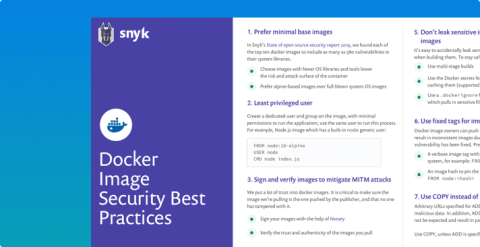
10 Docker Security Best Practices

Docker security refers to the build, runtime, and orchestration aspects of Docker containers. It includes the Dockerfile security aspects of Docker base images, as well as the Docker container security runtime aspects—such as user privileges, Docker daemon, proper CPU controls for a container, and further concerns around the orchestration of Docker containers at scale. The state of Docker container security unfolds into 4 main Docker security issues.

How Calico Network Threat Detection Works

In today’s cloud-native environments, network security is more complex than ever, with Kubernetes and containerized workloads introducing unique challenges. Traditional tools struggle to monitor and secure these dynamic, interconnected systems, leaving organizations vulnerable to advanced threats, such as lateral movement, zero-day exploits, ransomware, data exfiltration, and more.

Sysdig is recognized as a Customers' Choice in Gartner Voice of the Customer for Cloud-Native Application Protection Platforms

As the adoption of cloud-native technologies like containers, Kubernetes, and microservices have evolved, traditional security solutions have struggled to keep up. According to the Sysdig Threat Research Team (TRT), the average time it takes an attacker to perform reconnaissance and complete an attack is just 10 minutes. To help teams outpace attackers, cloud-native application protection platforms have emerged.

Top Kubernetes Security Tools in 2025

Kubernetes security is a critical part of the app lifecycle, through the build, deployment and runtime stages. Kubernetes runtime environments are dynamic and continuously changing. As clusters are replaced and permissions reassigned, security becomes an innate part of DevOps. It is important to ensure that malware and other malicious attacks do not access the cloud, as they might lead to system failures, servers going down, and more.

Kubernetes Security in 2025: The De Facto Platform of GenAI Applications

Over the past year, there has been a culmination of hype and excitement around Generative AI (GenAI). Most organizations initiated proof-of-concept projects for GenAI, eager to reap the technology’s benefits, which range from improved operational efficiency to cost reductions. According to recent research, 88% of organizations are in the midst of actively investigating GenAI, transcending other AI applications.