Security | Threat Detection | Cyberattacks | DevSecOps | Compliance

Detecting Network-Based Anomalies with Calico

In the vast digital landscape, the flow of data across networks is akin to water coursing through a city’s plumbing system. Just as impurities in water can signal potential issues, deviations in network traffic, termed as network inserted anomalies, can hint at cyber threats. These anomalies range from overt signs like unauthorized access attempts to subtler indicators like unusual data transfer patterns.
Implement NIST cybersecurity framework with Calico to reduce security risks in Kubernetes environments

According to the CNCF annual survey released in 2022, 96% of organizations are using or evaluating Kubernetes as a platform for their containerized workloads. Containerization has gained popularity as it fosters DevOps culture and provides the agility and flexibility required for faster software release cycles. Kubernetes has crossed the “adoption chasm” to become a mainstream global technology, emerging as the operating system for the cloud.

Detect Secrets In Docker Images With ggshield - The GitGuardian CLI

Did you know that you can use ggshield to scan docker images for secrets? Many Docker images get shared through places like Dockerhub, and sometimes, images get shared unexpectedly, such as when you have a code leak. We built the `ggshield secret scan docker` command to help. With one simple command, anyone on your team can quickly detect any hardcoded credentials inside a docker image.

Falcon Cloud Security Kubernetes Admission Controller: Demo Drill Down

Misconfigured containers with root access are commonly deployed in cloud environments, leaving organizations vulnerable to adversaries. See how Falcon Cloud Security Kubernetes Admission Controller provides out of the box policies to prevent misconfigured containers from deploying, ensuring cloud environments are secured and compliant.

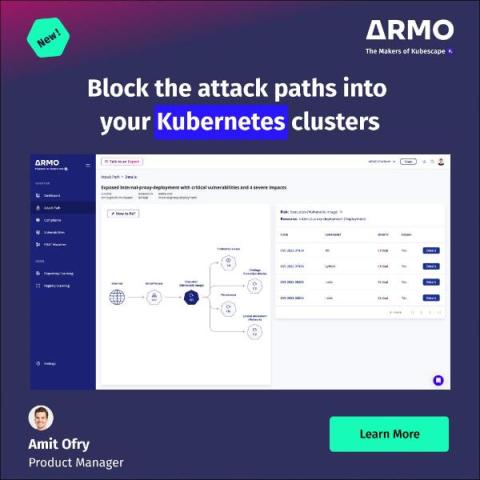
Block the attack paths into your Kubernetes clusters

In today’s world of limited time, we need to be laser-focused on our priorities. This goes double for mission-critical activities, like cybersecurity. We want to prioritize fixing the issues that have the most significant impact on our security posture. An attack path is like a roadmap for attackers, outlining the steps they can take to exploit security weaknesses.

Bolster Amazon EKS security with Calico's image assurance capability

The integration of cloud-native technologies like Kubernetes with public cloud platforms like Amazon EKS has ushered in a new era of scalable and efficient application deployments. However, this combination brings forth unique security challenges, especially concerning container images. Enter Calico Cloud’s Image Assurance – a comprehensive tool designed to bolster the security of your containerized applications on Amazon EKS.

The Essential Cheatsheet to Troubleshooting ImagePullBackOff with Examples

Imagine you have a perfectly working Kubernetes cluster, and when everything seems on course, you get an “ImagePullBackOff” error. Although this is a popular issue in Kubernetes, understanding and troubleshooting the root cause can be a real headache. Kubernetes is an open-source container orchestration platform originally developed by Google.

The easiest ways to create, test and deploy security policies for EKS clusters

Amazon’s Elastic Kubernetes Service (EKS) is a popular managed Kubernetes option that allows customers to benefit from both an offloaded Kubernetes management plane, and the wide range of services that AWS offers. Managed or unmanaged, securing cluster traffic is always critical and, although AWS Security Groups can secure the cluster nodes, securing pod traffic requires something closer to the application data-path.