Security | Threat Detection | Cyberattacks | DevSecOps | Compliance

Simplifying Government Data Protection for Kubernetes with CloudCasa

In the realm of government institutions in Brazil, regional electoral courts hold a pivotal role in ensuring the integrity of the electoral process. These institutions are mandated to safeguard their essential electoral data through off-site backup solutions. While Kubernetes’ efficiency and flexibility hold great promise for modernizing operations, government data protection challenges have deterred many regional electoral courts from embracing this technology.
How to Create Deployments and Services in Kubernetes?

Kubernetes is a container orchestration tool that helps with the deployment and management of containers. Within Kubernetes, a container runs logically in a pod, which can be represented as one instance of a running service. Pods are ephemeral and not self-healing, which makes them fragile. They can go down when an interruption occurs on the server, during a brief network problem, or due to a minimal memory issue—and it can bring down your entire application with it.

Sidecar Containers in Kubernetes: A Personal Journey

I had always wanted to use sidecars with Istio or Splunk forwarder in production, but as a Kubernetes maintainer, I knew there was no reliable way of telling Kubernetes to ensure sidecar containers were kept running before and after the main application. In this post I will share the twists and turns of my adventure in addressing this long-standing Kubernetes challenge.

Enabling Workload-Level Security for Kubernetes with Checkpoint Firewall and Calico Egress Gateway

Enterprises implementing containers and Kubernetes in either corporate datacenters or cloud environments typically employ Checkpoint Quantum to secure traffic between their datacenter networks and Checkpoint CloudGuard to safeguard their cloud resources. Often these network security perimeter focused solutions are also used to scrutinize traffic originating from Kubernetes clusters.

Agentless Vulnerability Management: A Complete Guide to Strengthening Your Security

This is how Maya, a devSecOps team lead at one of the prominent software development companies, started her presentation in front of Security leaders to show how the Agentless vulnerability management approach helped her: In this blog post, we’ll introduce you to Sysdig’s new Agentless scanning for vulnerability management.

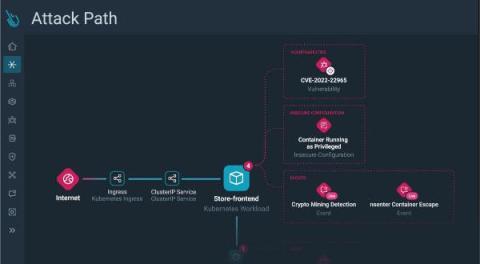
Unveiling Sysdig Secure Risks and Attack Path Analysis: Visualizing and Prioritizing Cloud Security Risks

While the cloud serves as a powerful accelerator for businesses, it also speeds up threat actors. Automation and an ever-increasing level of sophistication allow threat actors to execute complex attack chains in merely minutes, sometimes even less.The risk factors are amplified by the ability to chain together exploits and quickly move laterally in cloud environments, where a single breach could lead to a business critical compromise.

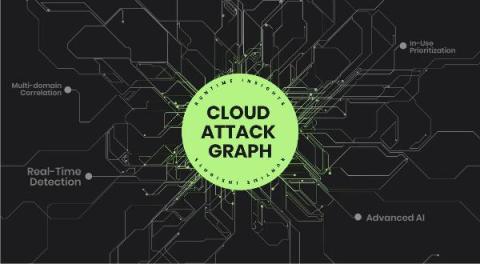
The Sysdig Cloud Attack Graph - Accelerating Cloud Native Application Protection Platform (CNAPP)

Attackers are increasing their focus on the growing cloud playing field as it becomes more lucrative. They are refining their craft to further accelerate attacks with methods like artificial intelligence and automation. Slow response times, limited coverage, and visibility gaps, often exacerbated by inadequate and fragmented tooling, allow attackers to make quick work of vulnerable environments.

When Seconds Count: Expanding Real-Time Capabilities Across CNAPP

The last few months at Sysdig have seen incredible product velocity as we accelerate our vision to create the leading cloud security platform, also known by the Gartner category Cloud-Native Application Protection Platform (CNAPP). In June, we enhanced our platform with end-to-end detection and response. Today, we are thrilled to unveil a suite of new capabilities powered by runtime insights: Skip ahead to the launch details!