Docker is a containerization platform for bundling your code, dependencies, and runtime environment into self-contained units that run identically in different environments. Dockerizing a PHP application simplifies deployment by packaging the PHP runtime, a web server, and your source code and composer dependencies into a container. Getting started with Docker is easy. However, there are a few pitfalls you need to avoid before you can safely use it in production.
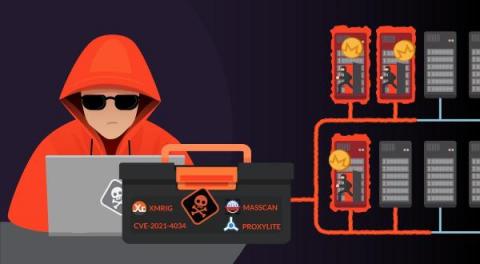
The Sysdig Threat Research Team (TRT) recently discovered a new, financially motivated operation, dubbed LABRAT. This operation set itself apart from others due to the attacker’s emphasis on stealth and defense evasion in their attacks. It is common to see attackers utilize scripts as their malware because they are simpler to create. However, this attacker chose to use undetected compiled binaries, written in Go and.NET, which allowed the attacker to hide more effectively.
The Sysdig Threat Research Team (Sysdig TRT) recently discovered a new Freejacking campaign abusing Google’s Vertex AI platform for cryptomining. Vertex AI is a SaaS, which makes it vulnerable to a number of attacks, such as Freejacking and account takeovers. Freejacking is the act of abusing free services, such as free trials, for financial gain. This freejacking campaign leverages free Coursera courses that provide the attacker with no-cost access to GCP and Vertex AI.
As modern software becomes increasingly cloud-based and containerized, application security tools must adapt to meet new challenges and provide security coverage across the software development lifecycle (SDLC). The use of container platforms like Docker and orchestration tools like Kubernetes inherently solves some security concerns – but containers are not without risk, and can even inject some new risks into your organization’s software.
The Gartner 2021 Hype Cycle for Cloud reports 99% of breaches start with cloud misconfigurations. Thus, having a philosophy of protecting just traditional endpoints – servers, laptops, desktop PCs, and mobile devices – with EDR (Endpoint Detection and Response) software is not enough. Sysdig has teamed up with multiple security organizations in the cloud security ecosystem to offer comprehensive security solutions.
Calico has recently introduced a powerful new policy recommendation engine that enables DevOps, SREs, and Kubernetes operators to automatically generate Calico policies to implement namespace isolation and improve the security posture of their clusters.