Security | Threat Detection | Cyberattacks | DevSecOps | Compliance

Fileless Malware Detection with Sysdig Secure

In today’s digital landscape, cyber threats continue to evolve at an alarming pace, with hackers constantly finding new ways to infiltrate systems and compromise sensitive data. One such sophisticated threat is fileless malware, a stealthy form of malicious software that operates entirely in the computer’s memory without leaving any trace on the hard drive.
Cloud Security Meets GenAI: Introducing Sysdig Sage

The scale and complexity of the cloud has redefined the security battleground. Threats can now be anywhere and attacks are far, far faster. We are proud to introduce Sysdig Sage - an AI-powered security assistant that redefines what it means to respond at cloud speed. With Sage's help, you can take action on an attack in under 60 seconds! Using multi-domain correlation, multi-step reasoning, and - most importantly - runtime insights, Sage speeds up your investigation by prioritizing security events, providing context, and helping you assess risk.

Preventing Vulnerable Container Deployments with Admission Control

In a previous blog post, Hands-on guide: How to scan and block container images to mitigate SBOM attacks, we looked at how Software Supply Chain threats can be identified and assessed. The severity of these vulnerabilities determine the posture or scan result for an image i.e. Pass, Warning or Fail. The next question is “What can we do with these results?”.

Implementing workload-centric Web Application Firewall (WAF) using Calico

Microservices security is a growing concern for businesses in the face of increasing cyber threats. With application layer attacks being a leading cause of breaches, it’s more important than ever to safeguard the HTTP-based communication between microservices within a Kubernetes cluster. Traditional web application firewalls (WAFs) are not designed to address this specific challenge, but Calico WAF offers a unique solution.

Unlocking efficiency: a strategic approach to handling Kubernetes security findings

Kubernetes has emerged as the de facto standard for container orchestration, enabling organizations to manage and scale their applications efficiently. However, with this increased adoption comes the need to address security concerns within Kubernetes environments. The following blog post will explore the concept of ignoring security findings as a means of prioritizing fixes effectively.

How to Install Velero for Kubernetes Backups

Velero is an open-source backup and recovery tool designed specifically for Kubernetes clusters. It provides a straightforward way to protect your Kubernetes resources, including persistent volumes, namespaces, and custom resources, by taking backups and restoring them in case of data loss or disaster recovery scenarios. In this blog you will learn the different use cases for Velero and the two ways to install Velero, using the Velero CLI and using a Helm chart.

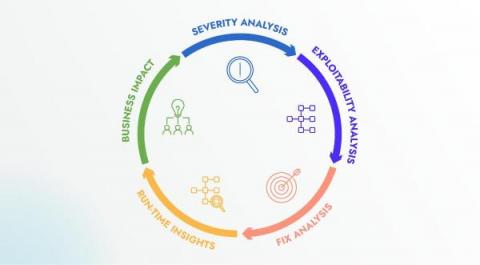
How to Deal with Hundreds of Fixes? Choosing the Right Vulnerability Management Solution

Relying solely on the Common Vulnerability Scoring System (CVSS) is insufficient when it comes to effective vulnerability management. While the CVSS score provides a quantitative measure of a vulnerability’s severity, it fails to capture the contextual nuances that can significantly impact the actual risk to an organization. In this article, we will discuss how best to choose a vulnerability management solution.

SCARLETEEL 2.0: Fargate, Kubernetes, and Crypto

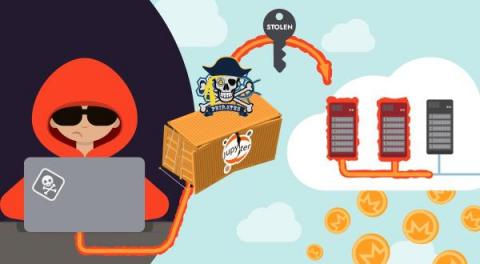
SCARLETEEL, an operation reported on by the Sysdig Threat Research Team last February, continues to thrive, improve tactics, and steal proprietary data. Cloud environments are still their primary target, but the tools and techniques used have adapted to bypass new security measures, along with a more resilient and stealthy command and control architecture.

Build and secure multi-cluster CockroachDB using the Calico clustermesh: A step-by-step guide

With the rapid adoption of Kubernetes in organizations and the push to standardize the orchestration of resources with this approach, databases are now also being deployed into Kubernetes. Historically, persistent workloads like databases were not recommended for their deployment into Kuberntes as it was complex to manage how data would be stored. This was a result of Kubertnes originally being designed for non persistent microservice architectures.

Audit and Compliance with Calico

In this blog post, I will be talking about audit and compliance and how to implement it with Calico. Most IT organizations are asked to meet some standard of compliance, whether internal or industry-specific. However organizations are not always provided with the guidance to implement it. Furthermore, when guidance has been provided, it is usually applicable to a more traditional and static environment and doesn’t address the dynamic nature of Kubernetes.