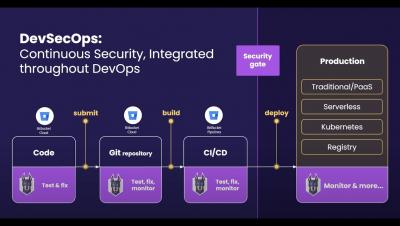
Rapid digitalization and increasing remote business operations place a significant burden on developers, who are continuously pressured to push out software faster. As a result, CI/CD security risks being overlooked, although it is an essential part of modern software development practice. While it accelerates product releases, CI/CD is vulnerable to cybersecurity issues such as corrupted code, security misconfiguration, and mismanagement of secrets.
Snyk is excited to announce a new, native integration with Atlassian Bitbucket Cloud. This new release improves Snyk’s functionality within Bitbucket Cloud, making installation faster, and easier to implement. Our Bitbucket integration is the first out-of-the-box embedded security experience within the Atlassian UI, enabling users to access high vulnerability counts and rich contextual information right from their native Bitbucket workflow.
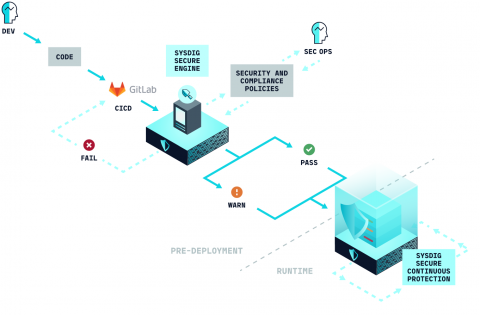
Scanning a container image for vulnerabilities or misconfigurations on your GitLab CI/CD using Sysdig Secure is a straightforward process. This article demonstrates a step-by-step example of how to do it. The following proof of content showcased how to leverage the sysdig-cli-scanner with GitLab CI/CD. Although possible, this procedure is not officially supported by Sysdig, so we recommend checking the documentation to adapt these steps to your environment.
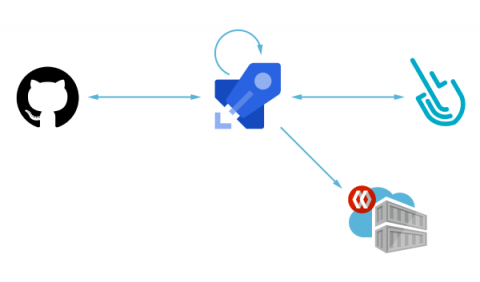
Scanning a container image for vulnerabilities or bad practices in your Azure Pipelines using Sysdig Secure is a straightforward process. This article demonstrates a step by step example on how to do it. The following proof of content showcased how to leverage the sysdig-cli-scanner in Azure Pipelines. Although possible, it is not officially supported by Sysdig, so we recommend checking the documentation to adapt these steps to your environment.
Snyk Open Source supports C and C++ scanning for vendored open source dependencies via CLI — and we are happy to share that it is now available via our CI plugins as well. This guide will walk you through integrating C/C++ security scanning within pipelines to get vulnerability information and remediation advice directly to developers. Note that in the scope of this guide, we’ll refer to “C/C++” as just “C++”
CI/CD is a recommended technique for DevOps teams and a best practice in agile methodology. CI/CD is a method for consistently delivering apps to clients by automating the app development phases. Continuous integration, continuous delivery, and continuous deployment are the key concepts. CI/CD adds continuous automation and monitoring throughout the whole application lifetime, from the integration and testing phases to delivery and deployment.