Security | Threat Detection | Cyberattacks | DevSecOps | Compliance

How CI/CD-Integrated Fuzzing Improves Automotive Software Security

As vehicles are becoming increasingly dependent on software, automotive software teams are adopting CI/CD (continuous integration and continuous deployment/delivery). This enables them to build, test, and deploy code faster than ever while simultaneously reducing potential maintenance costs. In automotive projects, functional and security bugs can be highly consequential, especially if they are found in the later stages of software development or, even worse, after shipping.

How to Bake Security into your CI/CD Pipeline

According to IBM Security's "The Cost of a Data Breach Report", the global cost of data breaches in 2022 increased by 2.6% compared to previous year, reaching $4.35 million. The source code of major companies like Nvidia, Microsoft, Uber, Slack, Toyota was leaked, often caused by usage of hardcoded secrets (you can see more details in the infographics below). In those cases, lateral movements were compromising software supply chain security. In their report Gartner claims about 45% of companies should expect to become targets of supply chain attacks by 2025.

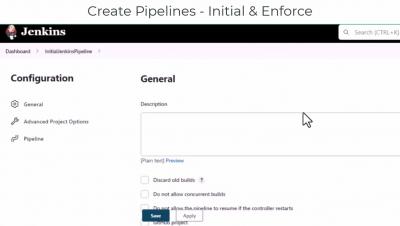
Securing your Jenkins CI/CD Container Pipeline with CrowdStrike

In any software development cycle, it is best practice to catch issues as early as possible since it both improves security and decreases the workload for both developers and security. In order to do this, CrowdStrike offers solutions for developers at build time that allow them to assess their Docker container images and review summarized report data integrated with their favorite CI/CD tools like Jenkins.

Securing your Jenkins CI/CD Container Pipeline with CrowdStrike

In any software development cycle, it is best practice to catch issues as early as possible since it both improves security and decreases the workload for both developers and security. In order to do this, CrowdStrike offers solutions for developers at build time that allow them to assess their Docker container images and review summarized report data integrated with their favorite CI/CD tools like Jenkins.

Customer Office Hours: CI/CD Best Practices

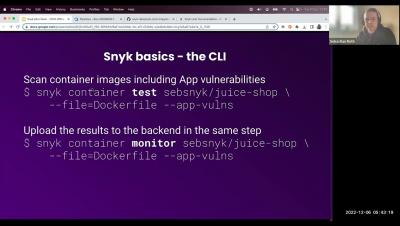
Learn tips and tricks on how to implement, troubleshoot and scale deployments. For example, should you scan in the CICD or in SCM? What implementation methods should you use - plugin, npm, binary…? We will cover this and more. Host: Sebastian Roth, Senior Solutions Engineer Seb brings his expertise as a Principal Software Engineer & Team Lead for over 17 years into the DevSecOps community, where he now focuses on process improvements and shares best-practices to improve security posture.

Mend SCA Action within Amazon CodeCatalyst Brings Additional Application Security to Developers

Announced today at AWS re:Invent, Amazon CodeCatalyst brings together everything software development teams need to plan, code, build, test and deploy applications on AWS into a streamlined, integrated experience.

How to Migrate Snyk to the new Bitbucket Cloud App Integration

Snyk has a new and improved Bitbucket Cloud App. The new Snyk Security for Bitbucket Cloud App features the same Bitbucket experience with a streamlined onboarding process and improved enterprise functionality. Here's how to migrate your existing Snyk as Bitbucket Cloud App (Legacy)—to the new Bitbucket Cloud App integration.

How to use GitHub Actions environment variables

To improve the efficiency of releasing working code into a production environment, implementing a continuous integration and continuous delivery (CI/CD) pipeline is a great practice. These pipelines automate the process of checking that a code change is ready for release and provides tools to automate the release to a production environment. One popular way to do this is to use your existing version control system.