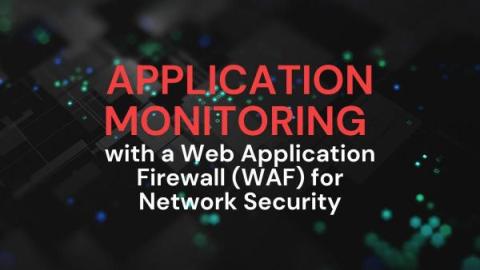
Firewalls act as the first line of defense against external threats and form the core of any network security infrastructure. Cisco firewalls are known for their security features and are available in different types such as stateful inspection, next-gen firewalls, etc. These firewalls do an excellent job at keeping your network safe from threats when paired with a robust firewall monitoring solution.
In a recently released Cybersecurity Advisory, the National Security Agency (NSA) and Cybersecurity and Infrastructure Security Agency (CISA) highlighted the most common cybersecurity misconfigurations in large organizations identified through blue team and red team assessments. The advisory stated that these misconfigurations illustrate systemic weakness in many large organizations, including those with mature cyber postures.
The nature of the modern digital business is constantly and rapidly evolving, requiring network and security architectures to move at the same speed. Moving at the speed of business demands a new architecture that is agile, flexible, highly scalable, and very secure to keep pace with dynamic business changes. In short, this requires SASE.
It’s been a long journey toward securing and optimizing the enterprise branch, from the days of rigid MPLS networks to the agile era of SD-WAN. Now comes the next stage of that journey: Secure access service edge (SASE), which, when architected correctly, converges the most important network and security capabilities into a single cloud-delivered service. Before we talk about how, though, let’s examine why SASE’s moment is now.
Many AWS customers have security requirements that are well beyond what AWS Security Groups or AWS Network Access Control Lists can offer in terms of scalability and security. That’s why many of them turn to AWS Network Firewall as a common solution.