Cato Networks Security Team- Elad Menachem VP of Research
Learn about the unique background of Cato’s security personnel and why converging security and networking data is critical for any security researcher.


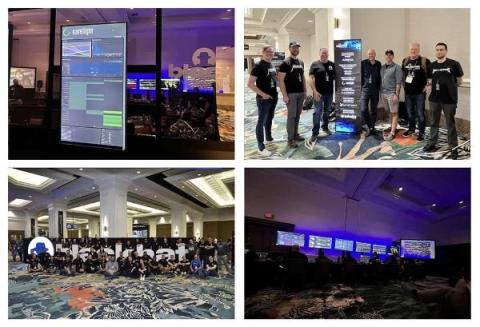
During Black Hat 2023 in Las Vegas, our Corelight team worked effectively and speedily with our first-rate Black Hat NOC partners Arista, Cisco, Lumen, NetWitness and Palo Alto Networks. I was fortunate enough to be a member of the NOC team at the show, helping to defend the Black Hat network. In this blog, I’ll share my experience within the Network Operations Center (NOC) as well as an incident that we detected, investigated, triaged, and closed using Corelight’s Open NDR Platform.
Network security has become paramount in safeguarding sensitive data and ensuring maximum efficiency in organizations today. As port scanning attacks increase, it’s important to stay vigilant to protect your enterprise systems from such threats. One essential tool that every network admin should have is the advanced network port scanner, which can help to identify and assess network port and switch port vulnerabilities.
The National Institute of Standards and Technology (NIST) Cybersecurity Framework (CSF) 1.1 has been a critical reference to help reduce or mitigate cybersecurity threats to Critical Infrastructures. First launched in 2014, it remains the de facto framework to address the cyber threats we have seen. However, with an eye toward addressing more targeted, sophisticated, and coordinated future threats, it was universally acknowledged that NIST CSF 1.1 required updating.
In today’s cloud-driven landscape, containerized workloads are at the heart of modern applications, driving agility, scalability, and innovation. However, as these workloads become increasingly distributed across multi-cluster, multi-cloud, and hybrid environments, the challenge of securing them grows exponentially. Traditional network security measures designed for static network boundaries are ill-suited for the dynamic nature of containerized applications.
In today's interconnected digital landscape, where data flows like a river through intricate networks, the importance of cybersecurity has never been more pronounced. As our reliance on digital networks grows, so do the threats that seek to exploit vulnerabilities in these very networks. This is where the concept of resilient networks steps in, acting as the guardians of our digital realms.
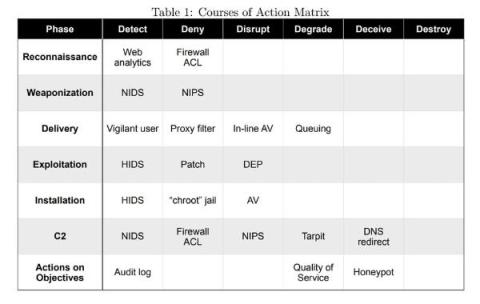
When Eric M. Hutchins, Michael J. Cloppert, and Rohan M. Amin published their paper “Intelligence-Driven Computer Network Defense Informed by Analysis of Adversary Campaigns and Intrusion Kill Chains” in late 2010, they changed the way security personnel thought about defending their digital assets. The paper continues to be a useful model for defense today. This article proposes ways that modern network-derived evidence applies to the kill chain.