Security | Threat Detection | Cyberattacks | DevSecOps | Compliance

Using Forward's Vulnerability Analysis with Fabrizio Maccioni

Forward Enterprise provides a vulnerability analysis of network devices that automatically compares the CVE information from the NIST database with the OS version running on the devices. The enhanced analysis helps prioritize remediation efforts by reducing the likelihood that unimpacted devices are reported as vulnerable.

Easily remediate the CVEs most likely to harm you using Forward Enhanced Device Vulnerability Analysis

Headline grabbing vulnerabilities, like SolarWinds and Log4Shell, target management software and end hosts, but if you search for “most exploited vulnerabilities” on Google, you will quickly learn that some of them directly target network and security devices as well as server load balancers. These are the 3 most exploited CVEs in the last couple of years: Would you be surprised to learn that network device operating systems can be vulnerable to security flaws like any other software?

What is an IT Security Network vs. a Cyber Security Network?

The terms "IT security network" and "cyber security network" are often used interchangeably, but there is a big difference between the two. An IT security network is focused on protecting your organization's computer systems and data from unauthorized access, while a cyber security network is designed to protect your entire organization from cyber attacks, including those that target your physical infrastructure.

Ransomware volume already doubled 2021 total by end of Q1 2022 says WatchGuard Threat Lab Report

New research shows Log4Shell detections tripled, PowerShell scripts heavily influenced a surge in endpoint attacks, the Emotet botnet came back in a big way and malicious cryptomining activity increased.

Authenticating legacy apps with a reverse proxy

When we think of “authentication” for our applications, most of us think of user registration, a login form, and resetting passwords. Our concerns begin and end there. But as we dive deeper and our security and compliance requirements change over time, we have to consider new password hashing algorithms, blocking bots, multi-factor authentication, and external identity providers. What started as a clear, concise set of requirements became an ever-growing list.

Improving Clinical Operations Efficiency through Network Analytics

In any organization and in largely any industry, most network analytics are driven by IT. Healthcare providers are no exception. The insights extracted via network analytics offer serious opportunities for operational improvements and added value across departments. There are also significant ancillary benefits from a more cyber-aware and “plugged in” organizational posture — including improved information sharing, collaboration, and security.

How Hospital Hacks Happen 1: The Unmanaged IOT

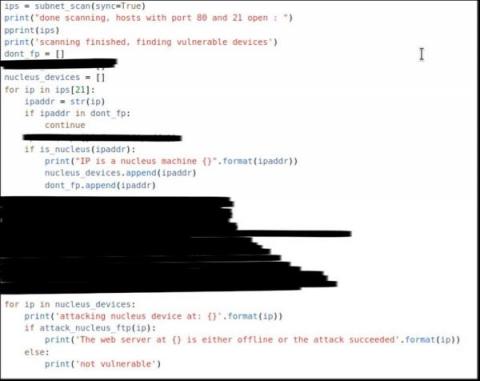
"How Hospital Hacks Happen" is the first in a series of videos that aims to raise awareness and education regarding both how hospitals can be attacked and how they can better protect their patients, medical devices and systems. The videos showcase various attack vectors and actors. In this one we look at unmanaged Internet of Things (IoT) devices.