

Security | Threat Detection | Cyberattacks | DevSecOps | Compliance

How Netskope NewEdge Takes SD-WAN to the Next Level

With Gartner releasing its latest Magic Quadrant for WAN Edge Infrastructure earlier this month, it seemed an appropriate time to explore the intersection of SD-WAN and SASE. Both of these technological approaches hold great promise and are large, billion-dollar markets, sharing the common goal of connecting users to the data and applications critical to doing their job. The two technologies demonstrate the increasing overlap and tightening linkage between networking and security investments.

The Cloud Network Security Gap

Before we dive into the gap in cloud network security, let’s take a step back. If you’ve been in Operations for a while, you might remember how it used to be. “Network” was a team. When you needed to open a port on the network, you had to provide an exhaustive definition of the change, explaining what port you needed, what external addresses should be able to reach it, and where it should be routed to internally.

3 Zones that Require Network Security for Industrial Remote Access

By now, we have a good understanding of what secure remote access (SRA) is and why organizations might choose to enable it for their OT environments. We also know that securing IT-OT collaboration, leveraging guidance from best practice frameworks and using an automated solution can help organizations to implement this type of access. Even so, we still don’t have a detailed view of how to implement industrial remote access in practice.

How Tripwire Custom Workflow Automation Can Enhance Your Network Visibility

Tripwire Enterprise is a powerful tool. It provides customers insight into nearly every aspect of their systems and devices. From change management to configuration and compliance, Tripwire can provide “eyes on” across the network. Gathering that vast amount of data for analysis does not come without challenges. Customers have asked for better integration with their processes and third-party tools.

Extend Your Fortinet FortiManager to Kubernetes

Companies are leveraging the power of Kubernetes to accelerate the delivery of resilient and scalable applications to meet the pace of business. These applications are highly dynamic, making it operationally challenging to securely connect to databases or other resources protected behind firewalls.

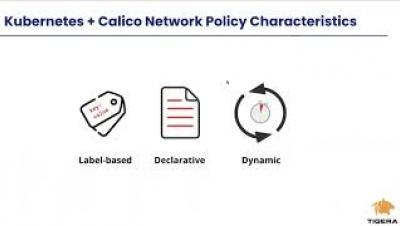
Calico and K8s Network Policies - An Overview and Comparison

In an age where attackers are becoming more and more sophisticated, network security as a line of defense is more important than ever. Network Policy is the primary tool for securing a Kubernetes network. It allows you to easily restrict the network traffic in your cluster so only the traffic that you want to flow is allowed. In this training session, we will go over the core concepts in Kubernetes Network Policies and Calico Network Policies. Compare and contrast between the two models, and highlight when to use one versus the other.

Deep packet inspection explained

Deep packet inspection (DPI) refers to the method of examining the full content of data packets as they traverse a monitored network checkpoint. Whereas conventional forms of stateful packet inspection only evaluate packet header information, such as source IP address, destination IP address, and port number, deep packet inspection looks at fuller range of data and metadata associated with individual packets.

FireEye vs Fortinet for Continuous Security

How does the fourth-largest network security company by revenue hold up against the first cybersecurity firm certified by the U.S. Department of Homeland Security? Fortinet's appliances and next generation firewalls (NGFW) have made it a category leader in unified threat management (UTM); let's see how they stack up against FireEye's comprehensive suite of enterprise security solutions.

Next generation firewall (NGFW) explained: What is a NGFW?

Traditional firewalls have been around for decades. But NGFWs, uninhibited by the same technology limits, take advantage of significant advancements in storage space, memory, and processing speeds. The feature set for NGFWs build upon traditional firewall features by including critical security functions like intrusion prevention, VPN, and anti-virus, and even encrypted web traffic inspection to help prevent packets containing malicious content from entering the network.

Data security vs. network security: What should your business prioritize?

Many businesses that have allowed employees to continue working from home for the foreseeable future are aware that they need to update their cybersecurity. It’s likely that they have allocated some budget and IT resources to make those necessary changes. However, IT budgets are finite. Given the economic disruption of the pandemic, enterprises must strategically decide where to invest their cybersecurity budget most effectively.