Security | Threat Detection | Cyberattacks | DevSecOps | Compliance

Cloud forensics - An introduction to investigating security incidents in AWS, Azure and GCP

The cloud has revolutionized the way we do business. It has made it possible for us to store and access data from anywhere in the world, and it has also made it possible for us to scale our businesses up or down as needed. However, the cloud also brings with it new challenges. One of the biggest challenges is just keeping track of all of the data that is stored in the cloud. This can make it difficult to identify and respond to security incidents.

GitGuardian Playbooks - Auto-Granting Access To Incidents

At GitGuardian, we know that time can be a critical factor when any incident involving secrets occurs. That's why our platform allows you to quickly and easily automate parts of your incident response. We call these automations "Playbooks". Our Auto-access granting playbook grants the right access to the right developers so they can work on the issue as soon as possible.

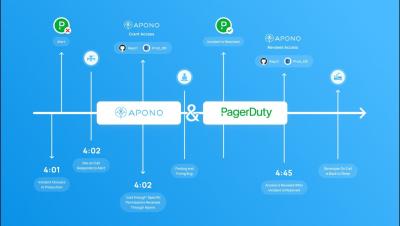
Apono & PagerDuty - "Just in Time" Access for On-Call Teams With Compliance Approval

Give on-call teams on-demand "Just-in-Time" granular access they need to resolve incidents in production with Apono's PagerDuty integration. Apono’s PagerDuty integration will validate that the requester is on duty and will send an approval request to the Compliance on-call group.

Why is Cyber Incident Reporting Important?

Because cyber threats continue to grow in sophistication and effectiveness, cyber incident reporting is not only important but also necessary for other organizations to learn from and prevent making the same mistakes. Many governing bodies and federal governments around the world have begun to require cyber incident reporting to document the type of attacks used, the source of the attacks, and how the attacks occurred to better understand the threat landscape.

A Complete Guide to Major Incident Management

Imagine a nightmare where you are in a dark tunnel and every minute without reaching the light costs a fortune. You try everything to find the exit, but there is nothing you can do. The incarnation of these nightmares is called “Major Incidents” in the cyber security field. These nightmares are likely to become a reality for managers of many organizations today, where companies manage almost all their business processes with digital solutions.

CIS Control 17. Incident Response Management

The Center for Internet Security (CIS) offers Critical Security Controls (CSCs) that help organizations improve cybersecurity. CIS CSC 17 covers incident response and management. (In earlier versions of the CIS controls, handling of security incidents was covered in Control 19.) CIS CSC 17 focuses on how to develop a plan for responding to attacks and other security incidents, including the importance of defining clear roles for those responsible for the various tasks involved.

Teleport and PagerDuty Integration

Teleport provides secure access for cloud applications and infrastructure that doesn’t get in the way. When implementing strict zero-trust rules you sometimes need to escalate and elevate privileges. By leveraging PagerDuty, you are able to alert the request and approve or deny system access. Using PagerDuty’s schedule feature, you are able to dynamically assign administrative privileges based on who’s on call. This greatly reduces the scope of access.
Sponsored Post

Using Predictive Analytics Capability to Resolve Critical Incidents

CloudFabrix solution provides a holistic approach for enterprises to implement proactive operations with the objective of eliminating/reducing critical incidents and improving customer satisfaction. The solution primarily relies on applying regression/forecasting models on any time-series data to detect and forecast anomalies. One of the unique features of the solution is the ability to convert unstructured data such as logs/incidents/alerts into time-series data to be used for running prediction models.