Security | Threat Detection | Cyberattacks | DevSecOps | Compliance

Tools for Threat Hunting and IT Service Risk Monitoring

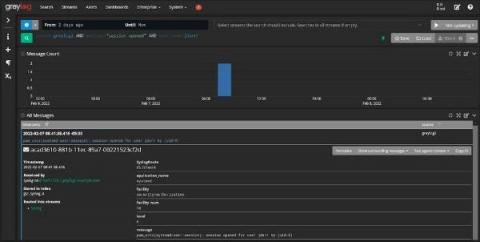
Cybersecurity can often seem intimidating for IT teams. After all, things like “threat hunting,” “red teaming,” and “blue teaming” are not used in IT operations. On the other hand, just because these words are terms of art doesn’t mean that they’re activities you don’t do already. You’re probably already using log data as part of your IT operations incident response.
You Bet Your Lsass: Hunting LSASS Access

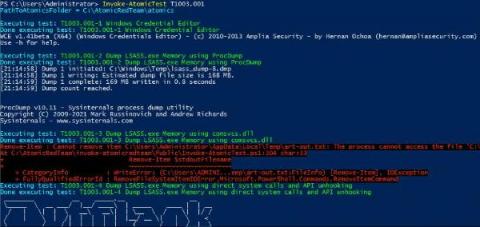
One of the most commonly used techniques is to dump credentials after gaining initial access. Adversaries will use one of many ways, but most commonly Mimikatz is used. Whether it be with PowerShell Invoke-Mimikatz, Cobalt Strike’s Mimikatz implementation, or a custom version. All of these methods have a commonality: targeting LSASS.

Building Your Security Analytics Use Cases

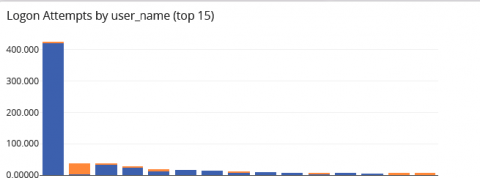
It’s time again for another meeting with senior leadership. You know that they will ask you the hard questions, like “how do you know that your detection and response times are ‘good enough’?” You think you’re doing a good job securing the organization. You haven’t had a security incident yet. At the same time, you also know that you have no way to prove your approach to security is working. You’re reading your threat intelligence feeds.

Falcon OverWatch Threat Hunting Contributes to Seamless Protection Against Novel BlackCat Attack

In an effort to stay ahead of improvements in automated detections and preventions, adversary groups continually look to new tactics, techniques and procedures (TTPs), and new tooling to progress their mission objectives. One group — known as BlackCat/ALPHV — has taken the sophisticated approach of developing their tooling from the ground up, using newer, more secure languages like Rust and highly customized configuration options per victim.

How are IT leaders approaching threat hunting?

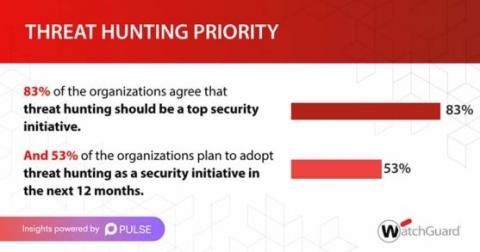
Implementing robust defense strategies helps to mitigate the risk of cyberthreats in the early stages of an attack. Threat hunting, as part of this strategy, enables organizations to find those unknown threats that manage to bypass technology-based controls by detecting abnormal behaviors. With a number of challenges associated with executing a defense approach, how are IT leaders approaching this problem? Pulse and WatchGuard surveyed 100 IT leaders to find out.

Falcon OverWatch Threat Hunting Uncovers Ongoing NIGHT SPIDER Zloader Campaign

Over recent months, the CrowdStrike Falcon OverWatch™ team has tracked an ongoing, widespread intrusion campaign leveraging bundled.msi installers to trick victims into downloading malicious payloads alongside legitimate software. These payloads and scripts were used to perform reconnaissance and ultimately download and execute NIGHT SPIDER’s Zloader trojan, as detailed in CrowdStrike Falcon X™ Premium reporting.

Hunting pwnkit Local Privilege Escalation in Linux (CVE-2021-4034)

In November 2021, a vulnerability was discovered in a ubiquitous Linux module named Polkit. Developed by Red Hat, Polkit facilitates the communication between privileged and unprivileged processes on Linux endpoints. Due to a flaw in a component of Polkit — pkexec — a local privilege escalation vulnerability exists that, when exploited, will allow a standard user to elevate to root.

Why should you include threat hunting services in your portfolio?

As mentioned in our previous blog post about threat hunting, there is significant interest in it. In fact, according to Pulse, 32% of IT leaders say that their organizations plan to reinforce their endpoint security posture by adding a threat hunting program to their overall security strategy. And it is not surprising since it is a potent tool to defend your customer. Here we have some of the key benefits that hunting brings to your value-added services.

Trustwave Threat Hunting Guide: Identifying PwnKit (CVE-2021-4034) Exploitation

The Trustwave Threat Hunting team has authored a practical guide to help the cybersecurity community address the Linux “polkit” Local Privilege Escalation vulnerability (CVE-2021-4034) by identifying common behavior in exploitation.