Security | Threat Detection | Cyberattacks | DevSecOps | Compliance

Using stats, eventstats & streamstats for Threat Hunting...Stat!

If you have spent any time searching in Splunk, you have likely done at least one search using the stats command. I won’t belabor the point: stats is a crucial capability in the context of threat hunting — it would be a crime to not talk about it in this series. When focusing on data sets of interest, it's very easy to use the stats command to perform calculations on any of the returned field values to derive additional information.


Key Threat Hunting Deliverables with PEAK

When most people think of threat hunting, they think of uncovering unknown threats. Would you believe me if I told you that is only ONE of many (better) reasons to show value with threat hunting? The PEAK Threat Hunting Framework incorporates three distinct hunt types: hypothesis-driven, baseline and model-assisted threat hunts. Each hunt type follows a three-stage process: Prepare, Execute, and Act.

Amid Sharp Increase in Identity-Based Attacks, CrowdStrike Unveils New Threat Hunting Capability

Adversaries are doubling down on identity-based attacks. According to Nowhere to Hide: CrowdStrike 2023 Threat Hunting Report, we’ve seen an alarming 583% year-over-year increase in Kerberoasting attacks — a form of identity-based threat — and a 147% increase in access broker advertisements on the dark web. Adversaries are evolving their tradecraft, building custom tooling and leveraging more than usernames and passwords to breach your environments.

Threat hunting with Sumo Logic: The Command Line

Consider the following scenario: you are asked by your leadership to find dedicated time for threat hunting activities within your network. After some time, access to the shiny new tool of choice is granted and you are super excited to get started. You log into the tool and are greeted with a lovely search bar; how do you proceed from here? The tool presenting the blank search bar is undoubtedly powerful and feature packed.

Using Splunk Stream for Hunting: Finding Islands in the Stream (of Data)

Today, we are going to look at using the Splunk Stream App to hunt for threats across your network. Sing along with us! 🎼 “Islands in the stream” of our data… (Part of our Threat Hunting with Splunk series, this article was originally written by John Stoner. We’ve updated it recently to maximize your value.)

Using the Lookup Command for Threat Hunting (Lookup Before You Go-Go)

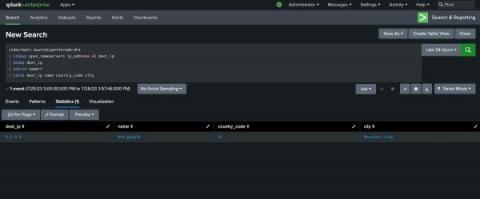
A wise person once said that you should use the lookup command before you go threat hunting. Or, as I hear it in my head, “Look it up before you go-go…hunting”, a la WHAM!:   In this must-read tutorial for hunting in Splunk, we’re looking at the lookup command, including what it does and how and where to use it for threat hunting. Let’s get started! (This article is part of our Threat Hunting with Splunk series. We’ve updated it recently to maximize your value.)

Using Threat Hunting to Uncover Cybersecurity Threats

In the fast-evolving digital landscape, the prevalence of cyber threats has become a stark reality for businesses and individuals alike. The conventional cybersecurity measures, while essential, are often reactive and inadequate against sophisticated attacks. This is where Threat Hunting emerges as a proactive and dynamic approach to cybersecurity. In this blog, we delve into the fascinating world of Threat Hunting and explore its significance in safeguarding against cyber adversaries.

Turning Hunts Into Detections with PEAK

If you’ve been following our series on the PEAK threat hunting framework, you might already know that the purpose of threat hunting isn’t just to find security incidents your automated detection systems missed. Finding incidents is more like a helpful side effect. The real reason to hunt is to drive improvement to your security posture over time.

Splunk SOAR Playbook of the Month: Threat Hunting with Playbooks

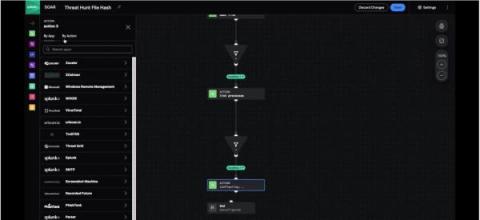
As SOCs continue to grow and mature, it's vital that they establish effective and repeatable programs in proactive defense. This also means that threat hunting needs to become a critical function. Numerous advanced and sophisticated threats are able to get past more traditional cybersecurity defenses and SOCs need skilled Threat Hunters who are able to search, log, monitor, and remediate threats before they create a serious problem.

What is Cyber Threat Hunting?

Cyber threat hunting is a proactive security strategy that involves searching for threats within a network before they can cause significant damage. Unlike traditional methods, which are reactive and wait for an alert before taking action, threat hunting seeks to actively identify and mitigate hidden threats that have evaded initial security measures. Threat hunting involves constant monitoring and data analysis to spot suspicious behavior that may indicate a cyber attack.