Security | Threat Detection | Cyberattacks | DevSecOps | Compliance


Securing AWS IAM with Sysdig Secure
Last year’s IDC’s Cloud Security Survey found that nearly 80 percent of companies polled have suffered at least one cloud data breach in the past 18 months.
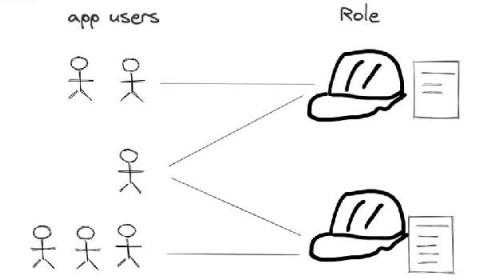
RBAC and ABAC with AWS IAM
This is a guest blog post from Shuo Yang in his blog series “Transitioning to Programming the Cloud”, as a part of our blog posts focusing on Identity, Security and Access. We talked about how AWS CIP, STS and IAM can serve as the foundation of application authorization in our last post, i.e., how the application gets the temporary credential representing a specific role (i.e.

Five worthy reads: Password hygiene - The first step towards improved security
Five worthy reads is a regular column on five noteworthy items we’ve discovered while researching trending and timeless topics. This week let’s go back to security basics with password hygiene—the simplest, and yet often overlooked step in account security. Passwords have been the bane of many internet users since the inception of the world wide web.

What Is Privileged Access Management (PAM)?
Users with privileged access to an organization’s systems and networks pose a special threat. External threat actors often target privileged accounts using phishing schemes and social engineering techniques, since gaining control over these credentials helps them move more freely inside the network. Moreover, people sometimes misuse their own privileged accounts; this type of cyberattack takes the longest to discover, according to the Verizon Data Breach Investigation Report.

Privileged access management: a complete guide for security leaders
What is Access Control? Components and Types
Digital transformation changes the perimeter. When organizations had all their applications on-premises, the network firewall kept the right users inside the gate and malicious actors outside. However, the move to the cloud changed all that. In today’s hyper-connected ecosystem, understanding the components and types of access control can help you strengthen security.
Magic in Cybersecurity: Magic links to replace the password
These days, magic links are in the air. They are becoming an intriguing means to strengthen digital security without inconveniencing users. This article discusses magic links, their magical function, and their potential benefits for a corporation.

The Principle of 'Least Privilege' in the World of Cybersecurity
The principle of least privilege in cybersecurity prescribes that no user should have access to system resources beyond what’s necessary for fulfilling a specific task. Adhering to this principle has become essential, as one of the primary ways malicious actors breach a system is by compromising (legitimate) user access.
AWS IAM security explained
AWS Policies are a key foundation in good cloud security, but they are often overlooked. In this blog, we take a quick look on some AWS Policies, particularly for Identity and Access Management (IAM), that could become problematic if not properly managed. We'll discuss how they can be used against us to generate attacks like: Ransomware, data exfiltration, credential abuse, and more. Finally, we'll suggest some Open Source tools for cloud policy assessment and pentesting.