Security | Threat Detection | Cyberattacks | DevSecOps | Compliance

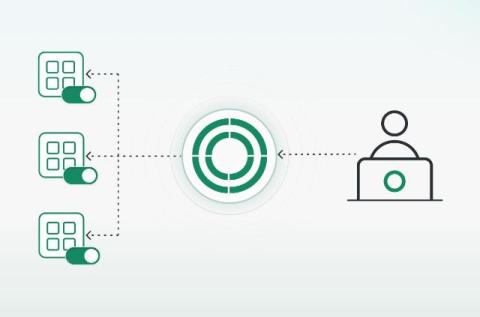
Private App Access, Zero Network Change

As organizations advance toward Security Service Edge (SSE), secure access to private applications has become a practical priority. Executives rightly expect these programs to improve security while increasing agility. Yet many initiatives slow down at the same point: extending access to private applications. The work often depends on firewall exceptions, routing changes, and cross-team coordination, followed by tightly controlled maintenance windows.

What Makes LCD Displays Reliable and Efficient

Electronic screens are everywhere today. Selecting the right technology makes a major difference in how a device performs. Liquid crystal displays have held a top spot in consumer electronics for decades. They offer a strong mix of performance and value. These screens operate reliably under conditions that cause other displays to fail. Hardware designers look for components that balance clarity with power consumption. Understanding what makes them work helps teams pick the best components. Let us examine the mechanics behind these dependable screens.

How to Tell If Your AI Agent Has Been Compromised (When Every Symptom Looks Normal)

Your AI agent just did something it has never done. It called a tool that is not in its usual set, or it opened a connection to a destination you do not recognize, or its output came back subtly wrong. So you do what anyone does: you search for what a compromised agent looks like, and you find a checklist. Unusual tool usage. Unexpected data access. Out-of-context responses. Elevated resource consumption.

Tool Call Analysis for AI Attack Detection: Reading What Rides Inside the Call

A compromised agent doesn’t make a single call it isn’t allowed to make. It queries a table it’s authorized to read, calls a tool it’s authorized to use, sends to a domain that’s on the allowlist. Every call is legal. The attack is in the values it passes, and your tool-call log records all of it as a clean day’s work. A tool call has two layers. Almost every tool you run reads the first one: the call itself: which tool, in what order, at what rate.

The AI Agent Attack Kill Chain: Which Stages You Can Actually Detect

The early stages of an AI agent attack are silent. The poisoning, the hijacked intent, the reconnaissance: none of it executes, so none of it produces a runtime signal, and the kill-chain instinct every security team runs on says exactly the wrong thing here: break the earliest link. There is no early link to break. You cannot detect a stage that emits nothing.

Types of AI Agent Attacks: A Security Team's Taxonomy

A security team running agents in production can already list the ways those agents get attacked: prompt injection, memory poisoning, tool abuse, model tampering, agent-to-agent coercion. The list is not the problem. The problem is that a security architect can recite all five and still not know which ones their detection stack will catch, because the way the field catalogs these attacks says nothing about whether the attack is catchable.