Security | Threat Detection | Cyberattacks | DevSecOps | Compliance

Hashing vs. Encryption: Differences, Use Cases, & Role in IAM

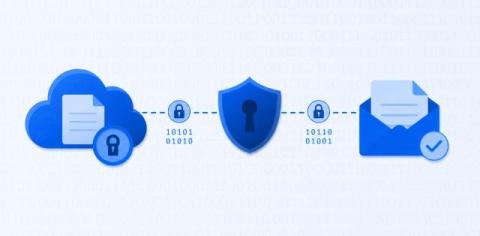
Your passwords, login tokens, and personal information need protection when you use an online service. Two technologies that help protect this information are hashing and encryption. Identity and Access Management (IAM) incorporates both, but they solve different security problems. Hashing helps verify passwords and detect changes to data. Encryption protects sensitive information that authorized users or systems need to retrieve. Understanding hashing vs.


How to Make a New Email Address for Secure, Encrypted Messages

Making a new email address only takes a few minutes. But when creating a new email account, it's worth considering more than just how easy it is to sign up. Your email provider can determine how your messages, attachments, and personal information are protected. This is why Internxt has added Internxt Mail to join its private cloud storage solution, VPN, and other products to guarantee your privacy online with end-to-end encryption.

Quantum Computing and the Future of Security: What Teams Should Understand Now

Quantum computing is one of the most hyped topics in technology, and for security professionals it carries a particular weight. Beyond the general excitement about a new kind of computing lies a specific and serious question: what will quantum computers mean for the security we rely on today? Much of the encryption that protects data, communications, and systems rests on mathematical problems that ordinary computers cannot solve in any practical amount of time. Quantum computers, at least in principle, could one day solve some of those problems, which would have real consequences for security.

What is SLH-DSA? Hash-Based Post-Quantum Digital Signature Guide

SLH-DSA is NIST’s standardised post-quantum digital signature algorithm (hash-based). It generates quantum-resistant signatures, ensuring signatures are not changeable and that they will not be forged, even when later superseded by schemes like RSA and ECDSA, which are susceptible to attacks by quantum computers. Organisations are studying it today because large-scale quantum computers could, in the future, crack the algorithms that currently underpin most digital trust.

PQC Post Quantum Cryptography Explained: Why Today's Encryption Has an Expiration Date

The encryption protecting today’s data isn’t broken, but it does have a timeline. This video breaks down why current systems like TLS, PKI, and RSA remain secure today, and how quantum computing will change that. As progress accelerates toward large-scale quantum machines, organizations must prepare for a new era of security. Learn how PQC (post-quantum cryptography) helps address emerging risks like “harvest now, decrypt later,” and why tracking adoption of quantum-safe encryption is critical now, not later.

Cryptography is negotiated, not configured: Why PQC readiness needs network data

Post-quantum cryptography (PQC), and the many ways it intersects with IT and cybersecurity, is becoming increasingly important to organizations of every size. While it seemed like an esoteric concept a few years ago, relegated to cryptographers' conference talks, it’s now something that comes up in many of our customer conversations.

From Encrypted Mobile Traffic to Payment Manipulation

How KomodoSec’s AigentX Penetration Tester reverse engineered client-side encryption, turned the bypass into reusable Burp tooling, and used that access to validate a real business-logic flaw in a production mobile application. Client-side secrecy failed. Server-side trust became the real vulnerability. THE CHALLENGE A mobile app with TLS, certificate pinning, and a second encryption layer.

Why Network Privacy is Becoming a Critical Layer of Modern Cybersecurity

In 2026, network privacy has become a critical layer of modern cybersecurity. With cyber threats becoming increasingly advanced and businesses embracing hybrid work, cloud platforms, and interconnected systems, network security can protect data moving across networks and reduce exposure to cybercrime. This article will explore why network security is so important in 2026, the risks associated with unsecured connections, and how businesses can strengthen their posture. Read on to find out more.

Security by Design: Incorporating Cybersecurity into Early-Stage Software

In today's hyper-connected digital economy, launching a new software application requires balancing speed, innovation, and technological resilience. Early-stage founders and product teams naturally focus on building compelling user interfaces, refining core value propositions, and validating market demand as quickly as possible. However, treating information security as an afterthought or a secondary milestone to address post-launch creates massive operational vulnerabilities that bad actors can easily exploit.