Security | Threat Detection | Cyberattacks | DevSecOps | Compliance

Why AI Is Becoming an Operational Requirement for Security Teams

In our previous article, From Vulnerability Management to Continuous Security Operations, we explored how organizations are moving beyond traditional vulnerability management toward a model built on continuous visibility, continuous prioritization, and continuous action. But that evolution raises an important question: how do security teams sustain this model at scale? For years, the cybersecurity industry focused on visibility.
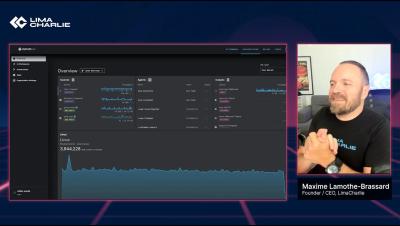

Grid by LimaCharlie: Agentic Detection, Investigation, and Response - Full Demo

In this session, LimaCharlie CEO Maxime Lamothe-Brassard walks through Grid, LimaCharlie's agentic SecOps layer built on Claude Code, and shows how it solves security operations problems end-to-end, from initial setup to ongoing autonomous maintenance. What's covered: Grid runs on Claude Code under the hood, with your own API keys, so cost is transparent and fully in your control. Timestamps.

IoT Security vs Traditional Endpoint Security: What Changes?

IoT security changes the way cybersecurity teams think about assets, identity, updates, and monitoring. A laptop, server, or phone usually supports endpoint agents and user-based controls, while an IoT device often runs quietly with limited interfaces, fixed firmware, and a specific operational task.

The Easiest Security Add of 2026 Is Also the Most Urgent

For years, cybersecurity conversations have focused on endpoints, networks, and email. Meanwhile, attackers have quietly shifted their attention elsewhere. Today, many breaches begin in the cloud. Compromised Microsoft 365 accounts. Misconfigured SaaS applications. Third-party integrations with excessive permissions. Employees are adopting AI tools without IT approval. These aren't edge cases anymore; they're becoming everyday realities for managed service providers (MSPs).

20,000 Instagram accounts hacked with AI tool abuse

A bug in Meta's AI-powered account recovery tool compromised 20,000 Instagram accounts. In this week's Intel Chat, Chris and Matt discuss how the flaw allowed attackers to bypass email verification. Meta patched the tool after discovering the abuse on May 31st. Matt's takeaway: tools given broad API access become attractive targets. Meta should have caught this in basic testing, yet it took an adversary to expose the weakness.

The Claude Fable Saga - The 443 Podcast - Episode 375

This week on the podcast, we unpack the Claude Fable 5 release and subsequent revocation following an export control directive from the US federal government. After that, we cover the recent FortiBleed credential dump, discussing its likely origins, before reviewing the most recent Windows 0day disclosed by Nightmare Eclipse.

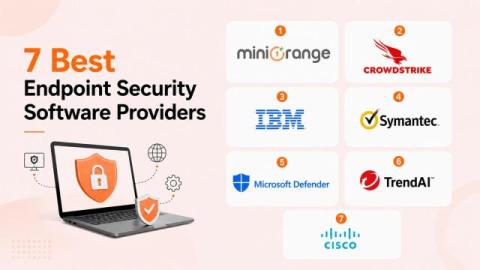
7 Best Endpoint Security Software for Businesses

Picking the best endpoint security for business depends on your org's size, stack, and how much in-house security muscle you actually have. CrowdStrike Falcon leads on pure detection, Microsoft Defender wins on value for M365-heavy shops, miniOrange is the strongest choice for mid-market businesses that need identity-first device security without the enterprise price tag, and IBM MaaS360 covers the UEM-first crowd that needs mobile + BYOD sorted from a single console.

Inside the Data: What SMBs Want from Their MSPs in 2026

Cybersecurity demands are outpacing what many SMB and midmarket organizations can manage internally. New global research from WatchGuard Technologies shows rising concern around AI-driven attacks, increasing pressure for 24/7 monitoring, and growing demand for MSPs that can deliver measurable security outcomes. In this webinar, WatchGuard will break down key findings from its global cybersecurity survey and what they mean for MSPs looking to grow their security practice and strengthen customer relationships. You’ll learn.

The Breaches You Don't See: Why Monitoring External Exposure Prevents Breaches

Most cybersecurity conversations focus on stopping attackers from breaking in. New malware variants, ransomware campaigns, AI-powered attacks, and zero-day vulnerabilities dominate the headlines. Yet many breaches occur for a much simpler reason: organizations unintentionally expose systems, applications, or data to the internet.

Helping APAC Organizations Stay Ahead of Cyber Threats w/ Brett Chalmers - The 443 Podcast - Ep. 374

Recorded live at WatchGuard’s APAC Partner Conference in Bali, Indonesia, this episode of 443 – Security Simplified features Brett Chalmers joining Marc Laliberte and Corey Nachreiner to discuss the evolving cybersecurity landscape across APAC. The conversation covers emerging threats, security challenges facing organizations, and how MSPs can help customers build resilience and strengthen their security posture in an increasingly complex threat environment.