Security | Threat Detection | Cyberattacks | DevSecOps | Compliance

The IT Asset Inventory Problem: Do You Know What's Actually on Your Network?

Ask a room of security leaders whether they have a complete, current inventory of everything on their network, and watch how long it takes anyone to say yes. Effort is rarely the issue. Modern environments change faster than any single record can keep up with. A configuration management database (CMDB) shows what was documented. An endpoint tool shows where its agent is installed. A scanner shows what it was told to scan.

A Practical Guide to Attack Surface Management

Attack surface management (ASM) is the discipline of continuously discovering, inventorying, assessing, and prioritizing every asset, control, and exposure across your environment. It gives you an always-on picture of what you actually have, rather than a point-in-time scan. Done right, it answers the three questions every security leader is really asking: What do I have? Where am I exposed? What do I fix first?

The Trillion-Dollar AI Bet Needs a Security Strategy

AI agents have now proven, in the real world, that autonomy without a security model is a liability. At Arctic Wolf, we’ve spent years watching that same lesson play out with cloud migrations, remote work, and every other rush of new technology, and this is that pattern showing up again, just faster.

See More, Act Faster: Arctic Wolf's Next Step in Accessible Security Operations

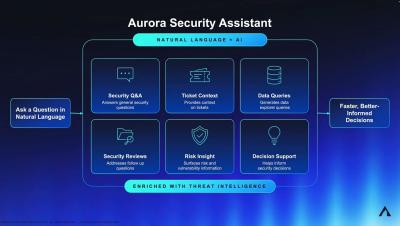
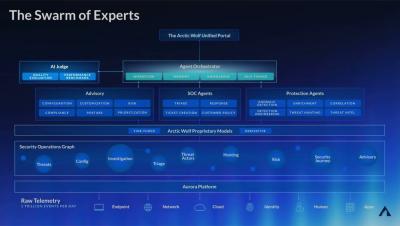
Security operations are complex. Teams are constantly balancing investigations, risk, operational health, and day-to-day priorities. Knowing what requires attention and deciding what to do next isn’t always easy. That’s why Arctic Wolf is introducing new experiences designed to make security operations more accessible and easier to manage.

Dark Caracal Reloaded: New Malware, Same Hunting Grounds

Arctic Wolf Labs exposes Dark Caracal’s evolving tradecraft, linking 249 samples to two operational build profiles and a resilient Ethereum-based C2 architecture targeting Latin America. In June 2026, Arctic Wolf Labs investigated a targeted intrusion affecting a communications organization in Venezuela.

How 24×7 Monitoring and Detection Solves the Cybersecurity Confidence Gap

Security leaders have more telemetry, more controls, and more visibility than ever. They also have real confidence in their teams. In the Arctic Wolf 2026 AI & Cybersecurity Trends Report, 96% of respondents said they were very or somewhat confident their security team could keep pace with the volume and complexity of today’s threats.

The Line Between Defense and Offense Just Moved. Here's What Comes Next.

For four decades, U.S. law drew a hard line around private-sector cybersecurity. Companies could detect, respond to, and report attacks. They could not fight back. On Wednesday, August 12, 2026, that line moved. President Trump signed a National Security Presidential Memorandum (NSPM) directing the Department of Justice (DOJ) and the Department of Homeland Security (DHS) to build a program letting vetted private companies conduct offensive cyber operations against foreign criminal groups.

The Tiered SOC Is Breaking: Why the Agentic SOC Is the Only Model Built for Machine-Speed Attacks

Twenty-two seconds. That’s the median time it now takes for one attacker to hand freshly compromised access to the next team in the chain, the group that drives toward ransomware. In 2022, that hand-off took more than eight hours. In 2025, it took twenty-two seconds. Now consider how the average security operations center (SOC) is structured to respond. An alert fires, lands in a queue, and waits for a Tier 1 analyst to triage it. It escalates to Tier 2 for investigation.

Microsoft Defender Patch Bypass: High Severity Zero-Day Privilege Escalation (CVE-2026-50656/RoguePlanet, ShieldBreak)

A critical zero-day vulnerability (CVE-2026-50656/“RoguePlanet”) in Microsoft Defender’s Malware Protection Engine (mpengine.dll) enables local users, including standard, low-privilege accounts, to escalate privileges to NT AUTHORITY\SYSTEM using a race condition and improper link resolution. Microsoft initially issued a patch (Engine v1.1.26060.3008) in July 2026.

Reflections from Black Hat: Speed Is Table Stakes. Resilience Is the Win.

Black Hat 2026 came just weeks after the Five Eyes cybersecurity agencies — CISA, the UK’s NCSC, Australia’s ACSC, Canada’s CCCS, and New Zealand’s NCSC-NZ — issued a joint statement to boards and executives with the blunt message that AI is rewriting the rules of cyber risk, the window between vulnerability and exploitation is shrinking, and organizations have a matter of months to adapt.