
Security | Threat Detection | Cyberattacks | DevSecOps | Compliance

CVE-2026-41940: Critical Exploited Authentication Bypass Vulnerability in cPanel & WHM

On April 28, 2026, cPanel patched a critical authentication bypass vulnerability affecting cPanel and WebHost Manager (WHM), tracked as CVE-2026-41940. The issue stems from a flaw in the login and session handling process that allows Carriage Return Line Feed (CRLF) injection, enabling remote threat actors to bypass authentication and gain unauthorized access to the control panel.

Vulnerability Prioritization Requires More Than a Score

As AI systems become more capable and increasingly embedded into business operations, security teams are confronting a familiar challenge in a new form: speed without context. Vulnerability discovery is accelerating toward machine scale, while adversaries continue to adapt in real time. In response, the industry has gravitated toward data‑driven scoring models to help determine what deserves attention first.

BlueNoroff Uses ClickFix, Fileless PowerShell, and AI-Generated Fake Zoom Meetings to Target Web3 Sector

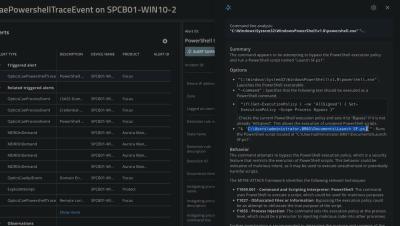
Arctic Wolf has identified a targeted intrusion against a North American Web3/cryptocurrency company, which we attribute with a high confidence level to BlueNoroff, a financially motivated subgroup of DPRK’s Lazarus Group.

Token Bingo: Don't Let Your Code be the Winner

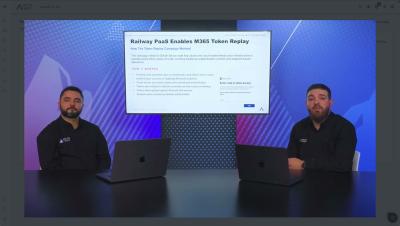
In early April 2026, Arctic Wolf began tracking a large-scale device code phishing campaign impacting organizations across multiple regions and sectors. Similar to the widespread “Riding the Rails” campaign first observed in late March by Huntress, the threat actors were observed abusing OAuth device code flow to trick victims into providing authentication codes and obtain initial access into victim environments.

AI Is Speeding Up Cyber Attacks. Can Security Teams Keep Up?

Frontier AI models are accelerating the discovery of new vulnerabilities combined with the ability to exploit those weaknesses at speed and scale. This alone isn’t the problem. Trust in AI‑driven security outcomes is. With AI dominating headlines, security leaders are asking what models like Mythos or GPT‑5.4‑Cyber mean for their business. The real issue runs deeper. Teams need to be able to trust tools and technology that move at machine speed.

Introducing Decipio: A Community Tool to Catch Credential Theft in the Act with Defense First AI

Today, Arctic Wolf is announcing Decipio, a new community‑shared cybersecurity tool designed to help defenders catch attackers while they’re trying to steal credentials inside a network. Credential theft is one of the most common ways cyber attacks begin and one of the hardest to detect early. In many cases, there’s no alert, no obvious warning, and no immediate sign that anything is wrong.

Frontier AI Models Mark a Turning Point for Cybersecurity

This week Anthropic announced Project Glasswing, a cybersecurity initiative built around Claude Mythos Preview, an unreleased frontier AI model capable of autonomously discovering and developing exploits for zero-day vulnerabilities across major operating systems and web browsers. According to early details, the model has already identified thousands of critical vulnerabilities that traditional tools have missed for years.

CVE-2026-35616: Fortinet Releases Hotfix for Critical Exploited Vulnerability in FortiClient EMS

On April 4, 2026, Fortinet released a hotfix for a critical vulnerability in FortiClient EMS (CVE-2026-35616) that allows unauthenticated remote threat actors to execute unauthorized code or commands via crafted requests. The flaw stems from improper access control in the API authentication. Fortinet has confirmed observing exploitation of CVE-2026-35616 in the wild. The vulnerability was responsibly disclosed by Defused, which had observed exploitation prior to Fortinet’s official disclosure.