Security | Threat Detection | Cyberattacks | DevSecOps | Compliance

Monitor your organization's security posture with Datadog

In Part 1 of this series, we looked at metrics that offer insight into the effectiveness of your threat detection systems and team response during a security incident. With this information, you have a starting point for identifying gaps in your organization’s security posture and the ability to respond to threats.
Scared or Ready: A Pragmatic Way to Approach Security Threats

Security incidents are often making headlines, from ransomware to colossal data leaks. On top of that, making informed security decisions is a challenge in itself, requiring knowledge across product requirements, complex distributed systems, code, architecture, and security. All of which creates a sense of fear, uncertainty, and doubt for those of us who build software. How can we better prepare to respond to potential threats and gain confidence in our security incident response readiness?

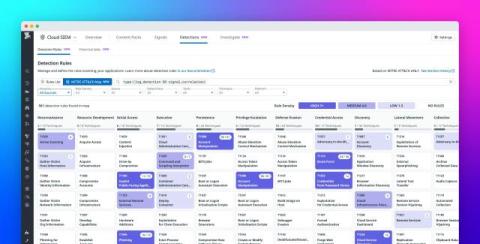
Identify gaps to strengthen detection coverage with the Datadog Cloud SIEM MITRE ATT&CK Map

Security analysts need clear visibility into potential threats to proactively defend against cyberattacks. Defining these threats can be challenging, but many security teams rely on the MITRE ATT&CK framework as a foundational resource for strengthening their defenses. While security platforms tag detections with MITRE ATT&CK tactics and techniques, analysts often struggle to assess their overall coverage across different attack surfaces.

Understanding your WAF: How to address common gaps in web application security

Web application firewalls (WAFs) are one of the most commonly used tools that organizations deploy to protect their applications at runtime. By monitoring HTTP traffic and filtering out suspicious requests, WAFs act as a protective layer around an application that protects it from certain types of incoming threats. However, WAFs often fall short of expectations.

Detect cross-account access risks in AWS with Datadog

Managing access across multiple AWS accounts is a popular approach to isolating workloads and data. While it provides several benefits to organizing the various operational requirements for the environment, it introduces additional complexity for managing IAM policies and workload permissions. A primary concern is assigning too many permissions to any one source, which increases the risk of an attacker moving within the environment undetected.

Securing Datadog's cloud infrastructure: Our playbook and methodology

At Datadog, we build and operate a complex, self-managed infrastructure that spans multiple cloud providers and serves many customers in regulated environments. We need to secure this large, distributed infrastructure while maintaining strict uptime requirements and scaling our finite people resources. In this post, I’ll detail the playbook that we use on Datadog’s Cloud Security team for securing our infrastructure, including.

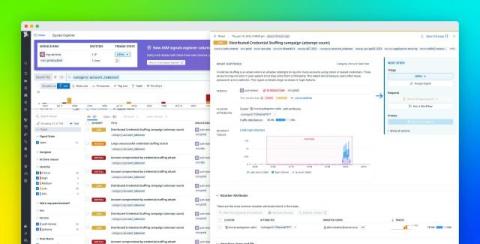
Detect and respond to evolving attacks with Attacker Clustering

In today’s threat landscape, detecting and responding to distributed attacks is more challenging than ever. Attackers often operate in stealth, using coordinated strategies to blend into normal traffic and evade detection. To address this issue, Datadog Application Security Management (ASM) has a new clustering feature designed to identify and group attacker behaviors during distributed attacks.

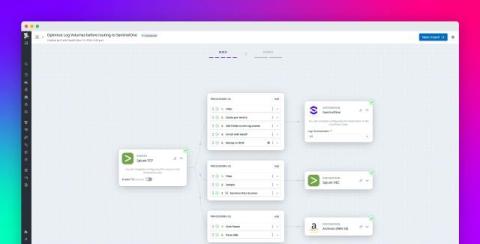
Optimize EDR logs and route them to SentinelOne with Observability Pipelines

Endpoint detection and response (EDR) systems such as SentinelOne Singularity Endpoint, CrowdStrike, and Microsoft Defender monitor IT infrastructure such as computers, mobile devices, and network devices to detect, alert on, and respond to cyber threats. These EDR systems record data about the endpoints to identify abnormal behavior, block malicious activity, and provide remediation suggestions with contextual information.

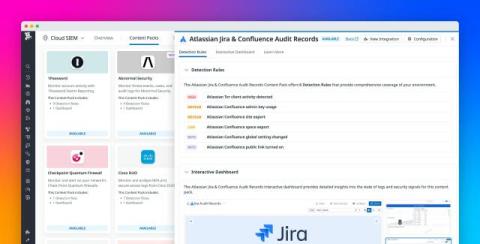
Monitor your Atlassian audit records and event logs with Datadog Cloud SIEM

Collaboration platforms like Atlassian Jira and Atlassian Confluence contain sensitive company and employee data, making them critical targets for cyberattacks. Teams use Jira to track and manage projects, and rely on Confluence as an internal knowledgebase for documentation, company policy guides, team wikis, and more. Atlassian organizations, which provide a centralized place for admins to manage their Atlassian products and users, are also prime targets.

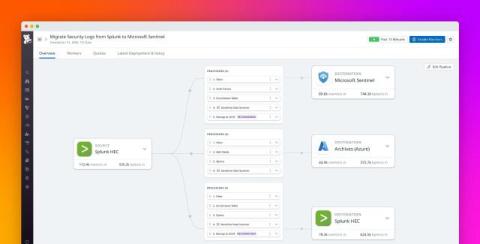
Simplify your SIEM migration to Microsoft Sentinel with Datadog Observability Pipelines

As cyberattacks rise in number and sophistication, many CISOs are pushing their organizations to adopt modern SIEM solutions to better monitor and investigate threats to their applications and infrastructure. Enterprises with a large Microsoft Azure or Windows-based footprint in particular are increasingly eyeing Microsoft Sentinel to consolidate their security stack and workflows.