Security | Threat Detection | Cyberattacks | DevSecOps | Compliance

Unlocking admin privileges via application-wide XSS delivery

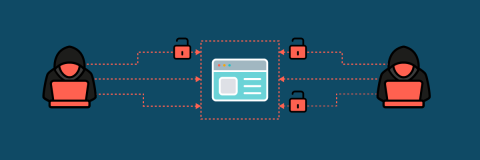
During a recent customer assessment, our pen testers discovered a critical vulnerability that exemplifies the importance of manual and continuous pen testing. The issue involved a feature intended for administrators, allowing them to send messages to a “broadcast” endpoint, which would then be displayed in a modal pop-up box for all logged-in users of the web application. However, our pen testers found that this functionality was accessible to any user, regardless of their role.


Microsoft Azure for Beginners: Best Practices for deploying your IaaS VM on Azure : Part 32

The first step in Azure is often to deploy virtual machines. Deploying Azure IaaS resources in Azure requires the right approach to ensure they are optimally functional and secure. In this blog post, the essential best practices to consider when deploying Azure IaaS resources in Azure.

Understanding Broken Authentication

With authentication, you can face serious consequences if you follow the old motto, “if it ain’t broke, don’t fix it.” From applications to APIs, authentication tells you whether the person or technology accessing a resource is legitimate. In 2017, the Open Worldwide Application Security Project (OWASP), identified broken authentication as #2 on its list of Top 10 application security threats.

Add To Chrome? - Part 4: Threat Hunting in 3-Dimensions: M-ATH in the Chrome Web Store

Welcome to the final installment in our “Add to Chrome?” research! In this post, we'll experiment with a method to find masquerading, or suspicious clusters of Chrome extensions using Model-Assisted Threat Hunting (M-ATH) with Splunk and the Data Science & Deep Learning (DSDL) App. M-ATH is a SURGe-developed method from the PEAK framework, which uses models or algorithms to help find threat-hunting leads, or to help make complex problems more approachable.

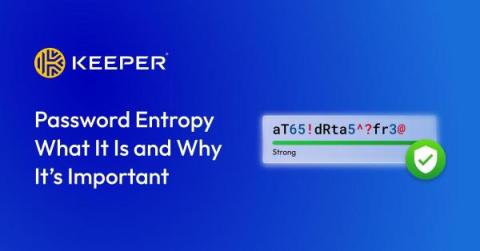
Password Entropy: What It Is and Why It's Important

Password entropy is a measurement of how difficult it would be for a cybercriminal to crack or successfully guess your password. When calculating password entropy, the calculation takes into account how long your password is and the variation of characters you’re using. Character variations include the use of uppercase and lowercase letters, numbers and symbols. Continue reading to learn more about the importance of password entropy and how you can calculate it using the password entropy formula.