Security | Threat Detection | Cyberattacks | DevSecOps | Compliance

Close the Discovery Gaps in Your CTEM Program with Seemplicity

CTEM Discovery is about more than finding assets. It’s about understanding what exists, what’s actually being scanned, and how data from different tools connects. Seemplicity correlates security, inventory, identity, and ownership data across sources to create a unified view of each asset, expose coverage gaps, and give security teams the context they need to prioritize, validate, and remediate exposures effectively.


How Memes Can Make Your Digital Marketing More Engaging

Digital marketing is crowded. Every day, people scroll past advertisements, promotional offers, product announcements, and carefully polished brand messages. Getting someone to stop for even a few seconds has become a challenge. That is why brands are increasingly looking for content that feels less like advertising and more like something people would naturally want to see and share.

What Marketing Trends Should Businesses Pay Attention to in 2027?

Marketing trends have a habit of arriving with dramatic predictions. Email is dead. Search is dead. Websites are dead. Social media has changed forever. Artificial intelligence will replace every marketing department by Tuesday afternoon. Reality is usually less theatrical. Most major marketing channels do not disappear overnight. Instead, the way people use them changes. Search evolves. Social platforms develop new roles. Video becomes easier to produce. New technology changes expectations. Customers become more selective about what earns their attention.

When Broken Links Become Security Vulnerabilities

Imagine a link on your website stops working. You notice the problem, add it to your backlog, and move on. A few months later, the link starts working again. At first glance, that sounds like good news. In reality, it could mean that someone else now controls the destination. Fortunately, this is not what usually happens. In most cases, a broken link is simply a maintenance issue. A page has been moved, deleted, or renamed. Visitors encounter an error, someone eventually fixes the link, and the story ends there.

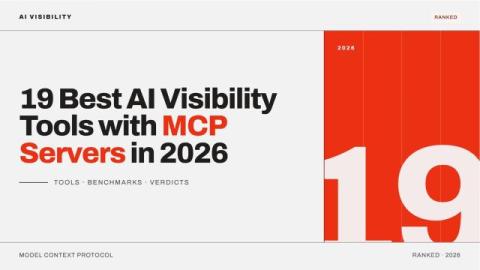
19 Best AI Visibility Tools with MCP Servers in 2026 (Ranked)

AI visibility work now happens in the same conversations where strategy already lives. Analysts draft in Claude, engineers debug in Cursor, and content leads paste ChatGPT screenshots into Slack threads that never become a ticket. Model Context Protocol (MCP) is what turns those screenshots into objects a model can query, filter, and act on. An MCP server exposes visibility scores, citation lists, advertiser intelligence, and even brief generation as tools the model can call mid-sentence, against live data, without a CSV hop. That timing matters because answer engines rewrite outputs daily.

Why Developer Endpoints Are the New Secrets Battleground

Secrets migrated from private repos to developer endpoints. Attackers no longer hack access. They log in with stolen credentials and move laterally. Dan Nguyen-Huu, Partner at Decibel Partners, explains what the shift means for defenders and where innovation is headed. "The endpoint is largely going to become one of the big new battlegrounds. I think there's also going to be new innovation on the endpoint as it pertains to new companies, maybe trying to think about DLP in a different way.".

Inside Agents of Chaos | Playthrough with a CrowdStrike Security Researcher

Watch Joey Melo, Principal Security Researcher at CrowdStrike, take on AI Unlocked: Agents of Chaos and see how he approaches the challenges, manipulates autonomous AI agents and works his way through the game. Now it’s your turn. All three acts are open, with increasingly difficult challenges waiting. Put your skills to the test, climb the global leaderboard and compete for a share of up to $100,000 in cash prizes.*

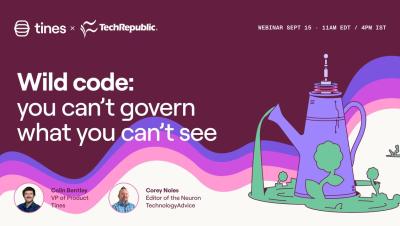
Wild code: You can't govern what you can't see

AI changed who can build. Employees across the business can now create workflows – apps, agents, and automations, faster than ever before. The result is a growing wave of “wild code”: AI-generated software, automations, and agents that solve real business problems but exist outside traditional governance, operational ownership, and support models. For IT, this creates a new challenge. How do you empower teams to move quickly without creating more risk, complexity, and technical debt? How do you support innovation without opening the door to shadow AI, data leakage, and unmanaged systems?