If you are used to managed MPLS services, transitioning to Internet last-mile access as part of SD-WAN or SASE might cause some concern. How can enterprises ensure they are getting a reliable network if they are not promised end-to-end SLAs? The answer: by dividing the enterprise backbone into the two last miles connected by a middle mile and then applying appropriate redundancy and failover systems and technologies in each section.
By Vadim Freger, Dolev Moshe Attiya On December 7th, 2023, the Apache Struts project disclosed a critical vulnerability (CVSS score 9.8) in its Struts 2 open-source web framework. The vulnerability resides in the flawed file upload logic and allows attackers to manipulate upload parameters, resulting in arbitrary file upload and code execution under certain conditions. There is no known workaround, and the only solution is to upgrade to the latest versions, the affected versions being.
Consider this: By the end of 2024, Gartner has projected that over 40% of enterprises will have explicit strategies in place for SASE adoption compared to just 1% in 2018. As the “poster child” of SASE (Forrester Research’s words not mine), Cato has seen first-hand SASE’s incredible growth not just in adoption by organizations of all sizes, but also in terms of third-party vendor requests to integrate Cato SASE Cloud into their software.
Enterprises in the private sector look to the US federal government for cybersecurity best practices. The US CISA (Cybersecurity & Infrastructure Security Agency) issues orders and directives to patch existing products or avoid use of others. The US NIST (National Institute of Standards and Technology) publishes important documents providing detailed guidance on various security topics such as its Cybersecurity Framework (CSF).
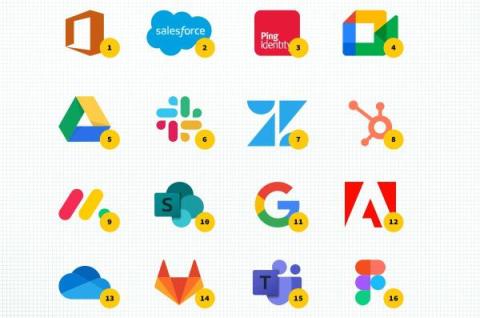
New applications emerge at an almost impossible to keep-up-with pace, creating a constant challenge and blind spot for IT and security teams in the form of Shadow IT. Organizations must keep up by using tools that are automatically updated with latest developments and changes in the applications landscape to maintain proper security. An integral part of any SASE product is its ability to accurately categorize and map user traffic to the actual application being used.
In the ever-evolving landscape of cybersecurity, the line between the defenders and attackers often blurs, with skills transferable across both arenas. It’s a narrative not unfamiliar to many in the cybersecurity community: the journey from black hat to white hat, from outlaw to protector. In the 15th episode of Cato Networks’ Cyber Security Master Class, hosted by Etay Maor, Senior Director of Security Strategy, we had the privilege of witnessing such a transformative story unfold.
My new favorite company took center stage in iconic New York Times Square today with a multi-story high 3D visualization of our revolutionary secure access service edge (SASE) platform. It’s positively mesmerizing, take a look: The move signals a seismic shift happening across enterprises, the need to have an IT infrastructure that can easily adapt to anything at any time, and the transformative power of Cato’s networking and security platform.