Security | Threat Detection | Cyberattacks | DevSecOps | Compliance

How to Prevent Active Directory Attacks by Securing Privileged Accounts

Let’s be honest—when Active Directory is compromised, the incident is never small. Almost every major enterprise breach involves Active Directory at some point. Attackers may enter through phishing, malware, or a misconfigured endpoint, but their real goal is always the same: gain control over privileged identities and Domain Admin accounts. Once that happens, containment becomes difficult and recovery becomes painful. Preventing Active Directory attacks isn’t about adding more tools.

CVE-2025-59287 WSUS Vulnerability: Exploitation, Defense & Detection Explained

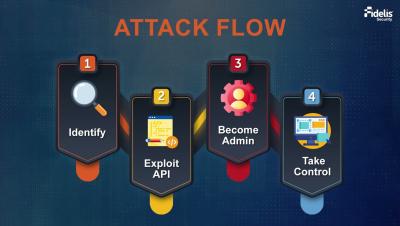
CVE-2025-59287 turns WSUS (Windows Server Update Services) into a high-value attack surface—and attackers are already abusing it. In this video, we break down how CVE-2025-59287 is exploited, what defenders should look for, and how to mitigate and detect attacks before damage spreads across your environment. What you’ll learn in this video: How attackers scan exposed WSUS servers on ports 8530 and 8531.

Hybrid Network Security in 2026: Key Challenges, Risks, and Best Practices

Secure hybrid networks promise agility by blending on-premises data centers with public cloud platforms and private cloud environments—yet cross-cloud blind spots leave security teams racing to spot threats slipping through hybrid seams. Attackers chain exploits across multiple environments while visibility evaporates under tool sprawl, turning flexible hybrid network architectures into dangerous patchwork. In 2026, US organizations face $10.22 million average data breach costs amid this chaos.

AWS ECR Scanning: The Practical Guide to Securing Your Containers

If you operate containers on AWS you’re likely familiar with how vulnerabilities can accumulate. The majority of container images currently include least one critical security flaw. Frequently hidden within a base image or an overlooked dependency. This makes enhancing your AWS container security essential. It’s the method to prevent problems such, as data leaks, privilege abuse and supply-chain threats.

Inside Cloud Malware Analysis: Techniques and Real-World Use Cases

Cloud environments power modern business, but they also attract sophisticated malware. Attackers target cloud storage, virtual machines, and APIs to hide malicious code and steal sensitive data. This guide explains cloud malware analysis in clear terms. It covers key techniques and real examples to help security teams spot and stop these threats.

Enterprise XDR Solutions: Comprehensive Comparative Analysis

The XDR market has grown as companies realize point solutions don’t deal very well with sophisticated threats. Research shows that nearly three-quarters of organizations are putting more money into XDR solutions because they see the value of integrated security.

How Attack Surface Monitoring Improves Mean Time to Detect (MTTD)

Even with modern security tools, many organizations detect threats far too late. Attackers often operate quietly for extended periods because early warning signs go unnoticed. Exposed assets, forgotten services, misconfigured cloud resources, and unmanaged SaaS integrations rarely trigger immediate alerts. This delay increase means time to detect because security teams typically respond only after suspicious behavior reaches internal systems.

Top 5 Enterprise Cloud Security Solutions to Consider in 2026

You’re likely dealing with a cloud footprint that grows faster than your ability to govern it. New workloads appear overnight. Developers spin up serverless services without telling security. SaaS systems store sensitive data outside your visibility. And identities connect everything together, which means one compromised token can trigger a multi-cloud incident. This constant expansion creates a monitoring gap—one that attackers understand better than anyone.

8 Strategies to Improve Cloud Visibility for Better Monitoring in 2026

Why Cloud Visibility Has Become Such a Pain Point for Enterprises Managing cloud visibility today feels overwhelming because your environment expands in ways you cannot always track. New cloud accounts appear before onboarding is complete, SaaS applications connect to production systems without security review, and identities multiply each time a new service is deployed. You are expected to monitor and protect an environment that evolves faster than documentation or tooling.