Security | Threat Detection | Cyberattacks | DevSecOps | Compliance

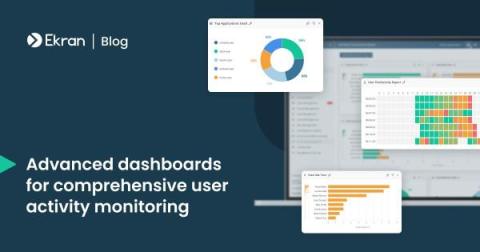
Enhancing Employee Monitoring with Ekran System's Brand-New Dashboards

Effective employee monitoring is essential for maintaining productivity and security, especially in heavily regulated industries like finance, government, and healthcare. That’s why at Ekran System we are continuously working to enhance our product’s monitoring functionality. Now Ekran System is introducing new informative and user-friendly dashboards that will help you streamline your insider threat prevention and productivity management efforts.
Addressing the Ethical Dilemma Surrounding Employee Monitoring: 8 Best Practices

As many organizations have transitioned to hybrid and remote work models, employee monitoring is rapidly gaining momentum. While organizations may have the right to monitor employee activity to ensure productivity, security, and compliance, they must do so ethically and responsibly. Taking appropriate measures to protect collected data is essential when fostering a culture of trust, transparency, and mutual respect between employees and management.

The 7 Industries Most Vulnerable to Cyberattacks

Cybersecurity threats loom large over businesses across various sectors. Cyberattacks may lead to data breaches, operational disruptions, monetary loss, reputational loss, and other negative impacts. The first step to preventing cyberattacks is identifying possible threats. The list of threats mainly depends on your industry and the types of data you store.

Tips and Best Practices to Secure Active Directory: Audit and Privileged Access Management

Active Directory (AD) is a useful service that helps organizations manage identities and control access to network resources, thus improving corporate cybersecurity. However, when poorly managed, AD can be exploited in a way that could harm an organization’s sensitive assets and operational resilience. In this article, we briefly define what Active Directory is, list its main services, and discuss possible threats.

7 Examples of Real-Life Data Breaches Caused by Insider Threats

Insiders know all the ins and outs of your organization’s infrastructure and cybersecurity tools. That’s why companies worldwide fall victim to numerous malicious and negligent insider security incidents every month, leading to data breaches and lots of other negative consequences. Such attacks may result in financial and reputational losses and might even lead to business disruption.

How to Calculate the Cost of a Data Breach

The financial consequences of a data breach can impact your organization in unprecedented ways. Entailing costly remediation measures and reputational damage, data breaches often amount to substantial monetary losses. But what factors contribute to the overall cost of a data breach? Calculating the financial cost of a data breach is a tricky process that includes estimating the total cost associated with all the consequences.

12 Cybersecurity Best Practices & Measures to Prevent Cyber Attacks in 2024

Keeping an eye on what’s happening in global cybersecurity is a must if your organization wants to get ahead of new threats and keep up with the latest cybersecurity technologies. Read this post to figure out what to expect from global cybersecurity in 2024 and learn how to secure data with 12 best cybersecurity practices your organization can implement.

Insider Threat Statistics for 2024: Reports, Facts, Actors, and Costs

Keeping up to date with the latest statistics on insider threats is critical for any organization that wants to be proactive in reducing potential risks. Being aware of current insider risks enables you to take the appropriate measures to mitigate them. This article outlines key facts endorsed by industry experts, discusses the findings revealed by insider threat research, and shows examples of damaging insider incidents.

Zero Trust Architecture: Definition, Key Components, and Functions

If you want to significantly reduce the attack surface and data breach risks for your organization, zero trust architecture may be the answer. This approach is becoming a priority for global organizations and tech giants like Microsoft that seek to reduce cybersecurity risks in their IT environments. It’s no wonder then that 10% of large organizations will have a comprehensive and mature zero trust program in place by 2026, according to Gartner’s predictions.