
Security | Threat Detection | Cyberattacks | DevSecOps | Compliance

Featured Post

Protecting the Corporate Nervous System: How to Prioritize Network Security Assurance

Network security protects the nervous system of modern businesses. Highly connected and widely distributed throughout the corporate body, it keeps applications regulated, tools performing, and operations stable when functioning well. But like the human nervous system, it is vulnerable to drifting away from an optimal state and becoming weaker, leaving it open to attack. While the human nervous system is affected by stress, lack of sleep, and poor nutrition, digital network security is prone to accidental misconfigurations, ungoverned rule changes, and controls that drift away from their intended state.
It Was Hard Before AI. It's Harder Now.

Security used to mean locking the doors and the windows. Networks are open now, and every new tool, integration, and workflow adds another way in. A device can report EDR installed and still carry an exclusion someone added on a Sunday two years ago. Deployment is easy to confirm. How the control is running is the harder question. Garrett Hamilton and Moudy Elbayadi get into it on Inflection Point: Digital Intelligence.

The New Reach Security: Autonomous Security Control Assurance

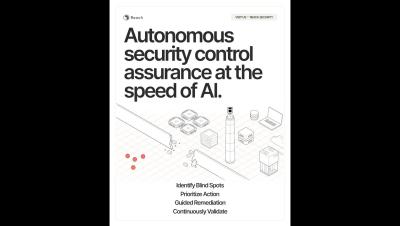
AI-powered attacks, meet AI-powered defense. Reach Security's rebranded site is live today. Most of what changed came from customers. Security leaders have been telling us they need a faster, more continuous way to know where their controls are weak, understand what matters most, and close the gaps before attackers exploit them. Our new website reflects that signal. It brings greater clarity to the problem we solve, the category we are building, and how Reach helps security teams identify blind spots, prioritize action, guide remediation, and continuously validate the controls they already own.

The Definitive Guide to Security Misconfiguration

The constant evolution of today's threat landscape has organizations counting on security controls to keep the bad actors out and safeguard their people, sensitive data, critical infrastructure, operations, and brand. However, even the most sophisticated security tools can present a risk when improperly configured. And unfortunately, even the best security teams can make mistakes.

Protecting the Corporate Nervous System: Why Network Security Assurance Is Becoming a Security Imperative

Modern enterprises depend on a complex network of interconnected systems, applications, identities, and security controls. This infrastructure has become the nervous system of the business, enabling critical operations, supporting applications, and enforcing the boundaries that protect sensitive data. When these systems function correctly, they become invisible.

The Missing Layer in Network Security: Continuous Assurance

Some of the most serious network security weaknesses develop gradually through routine operational changes. Firewall rules are adjusted to support business needs, exceptions remain in place longer than planned, and controls are modified during troubleshooting. Over time, those decisions can push the live environment away from the security posture the organization believes it has.

A Guide to Firewall Management: How to Set Up Proper Firewall Rules

Firewalls remain one of the most foundational controls in any security program. Nearly every organization has at least one, and in many cases, hundreds. Despite widespread deployment, firewalls are frequently a source of unintended exposure rather than protection. The reason is almost always in how firewall rules are maintained over time, not the technology itself.

Find and Fix Risky Firewall Rules | Reach Security Demo

A firewall rule set to allow any source to any destination can stay live for months. It cancels out the rules beneath it and lets traffic pass unchecked. That kind of drift sets off no alarm. It builds up between quarterly reviews, while small teams govern 50 or more firewalls and hundreds of rule changes a week. Reach Network Security Assurance finds these controls, shows how long each has been open, ties the finding to real exposure, and guides the fix.

What Is Firewall Configuration and Why Is It So Important?

Firewall configuration is the set of rules, policies, and settings that define how a firewall behaves. Without configuration, a firewall is hardware and software waiting for instructions. With configuration, it becomes a control that determines what traffic is permitted, what is blocked, and what gets inspected before a decision is made. Get the configuration right, and the firewall does its job. Let it drift, and you have the appearance of protection without the substance of it. This is not an edge case.