Security | Threat Detection | Cyberattacks | DevSecOps | Compliance

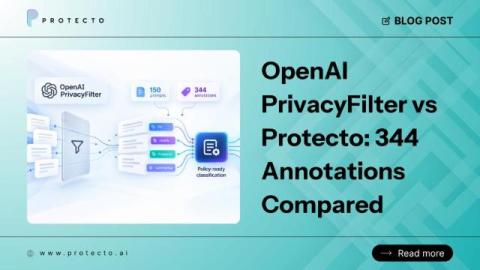
OpenAI PrivacyFilter vs Protecto: 344 Annotations Compared

Most evaluations of a PII protection layer ask one question: did it find the sensitive data? That was the right question when data loss prevention meant blocking. A DLP system that found a Social Security number stopped the email, and nothing downstream needed to understand what had been stopped. AI workflows are different. Sensitive data can enter through prompts, tool calls, retrieved RAG context, agent memory, and model outputs, including paths that may sit outside traditional DLP inspection points.
Shadow IT Was Just the Beginning. Meet Shadow Automation.

Most security leaders remember the first time they discovered shadow IT inside their own organization. A business team had adopted a SaaS application, connected it to company data, and built a workflow around it before anyone in security knew it existed. The tool was useful, and the team was productive. The governance conversation simply started months late. The agentic enterprise is creating a more consequential version of that problem.

Why Machine-Speed Risk Demands an AI-Assisted SOC

Security analysts traditionally move from an alert to a pivot, a search, a correlation, more pivots, and finally documentation before they can decide what to do. An AI-assisted workflow brings behavioral context, prioritized investigations, search timelines, and automation together, so analysts can review, validate, decide, and respond with far less manual friction. Exabeam Nova AI drives that shift, and the analyst stays responsible for validation and action.

Agentic Data Security: How Cyberhaven Secures Agent Workflows

Agentic workflows move sensitive data through systems that most security tools never see. This walkthrough follows one workflow from start to finish. A user shares customer data with an agent, the agent calls Model Context Protocol (MCP) servers to enrich its analysis, and the combined dataset is saved locally and shared through email, web upload, and USB. The video runs the workflow once without protection, then runs the same workflow again with Cyberhaven in place.

Record of Processing Activities (RoPA): How to build and maintain it

Accelerating security solutions for small businesses‍ Tagore offers strategic services to small businesses. A partnership that can scale‍ Tagore prioritized finding a managed compliance partner with an established product, dedicated support team, and rapid release rate. Standing out from competitors‍ Tagore's partnership with Vanta enhances its strategic focus and deepens client value, creating differentiation in a competitive market.

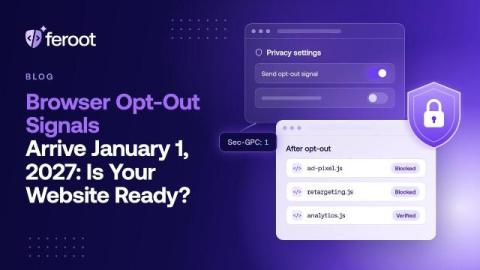
Browser opt-out signals arrive at scale on January 1, 2027. Here is how to know your site honors them.

If the CCPA covers your business, you must treat an opt-out preference signal as a valid request to opt out of the sale or sharing of personal information. "Sharing" includes disclosures for cross-context behavioral advertising, which is what most advertising pixels do.

CIPA for websites in 2027: what the law still covers, and how to show what your site does

If people in California use your website or app, assume CIPA applies. CIPA was written for telephone wiretapping, and courts have applied its "technology-neutral" terms to online communications for years. The business's location does not matter; the visitor's does.

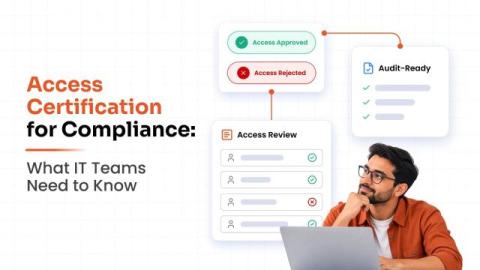
Access Certification For Compliance: What IT Teams Need To Know

An access review can look complete on paper. The campaign closed, reviewers made their decisions, and the records were saved. Then an auditor asks: Who reviewed this access, what did they decide, and what happened afterward? That question can reveal problems that a completed review does not show. A rejected permission may still be active. An exception may have no clear reason. The team may also struggle to show when the review happened.

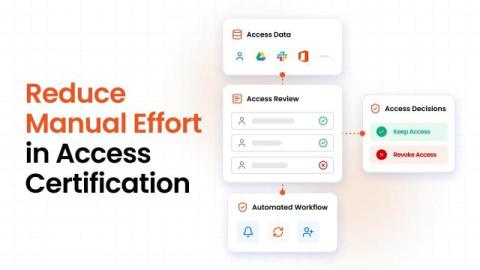
How to Reduce Manual Effort in Access Certification

Access certification can take more time than the actual review. A manager may need to review access for 50 employees. Before that happens, someone has to gather the access data, identify the right reviewer, send the requests, and track the responses. If the reviewer revokes access, someone may also need to remove it from the application. Now repeat that across hundreds of users and several applications. The workload adds up quickly.

Under CPS 234, Your APIs Are Information Assets. Can You Prove You're Protecting Them?

APRA's information security standard already covers the APIs your agents run on. Most institutions cannot yet evidence it. All APRA-regulated institutions in Australia are bound to meet CPS 234. This is the Prudential Standard for Information Security. Whether that's a bank, insurance provider, or super fund, they all fall under CPS 234, as do their third-party providers. Together, these institutions hold trillions of dollars in assets.