Security | Threat Detection | Cyberattacks | DevSecOps | Compliance

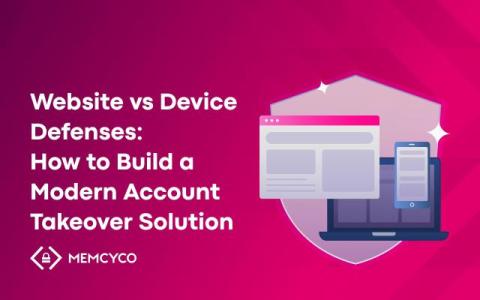
The MemcycoFM Show: Ep 19 - Website Cloning Detection for ATO Prevention

In the recently published blog from @Memcyco titled 'Website Cloning Detection for ATO Prevention', we discussed how, with real-time visibility and browser-level telemetry, website cloning detection becomes a frontline layer of your ATO prevention strategy. It provides actionable insights into impersonation activity that often precedes account takeovers, helping teams intercept fraud earlier and protect customer trust more effectively.

The MemcycoFM Show: Ep 18 - SOC Defense Against Credential Replay Attacks

In a recent blog post from @Memcyco , we discussed how credential replay remains one of the most efficient ways attackers turn stolen usernames, passwords, or tokens into real account access. Verizon’s 2024 DBIR shows that over 40% of breaches involve stolen credentials, underscoring the durability of this tactic. Even strong authentication is not immune. Techniques like pass-the-cookie and adversary-in-the-middle phishing allow attackers to replay tokens and sidestep MFA. Remote-access scams add another layer, handing fraudsters direct control of devices and sessions.

Bits AI Security Analyst: Automate Cloud SIEM investigations

Datadog's Bits AI Security Analyst transforms the way security teams handle investigations by autonomously triaging Datadog Cloud SIEM signals. Built natively in Datadog, it conducts in-depth investigations of potential threats and delivers clear, actionable recommendations. With context-rich guidance for mitigation, security teams can stay ahead of evolving threats with greater efficiency and precision.

Brivo Access: How to Assign a Dormakaba Mobile Pass and Unlock a Door

Assigning a dormakaba Mobile Pass to a user is quick and easy after you configure the integration. Watch this video to learn how to assign the mobile pass, and what the user experience looks like when opening a door. Explore the future of security and smart technology with Brivo. Our content delves into innovative solutions that empower businesses and individuals to create safer, more connected environments.

How to Build AI Agents That Don't Break: Design, Risk & Defense Explained #aiagents #AISecurity

Agentic AI is evolving fast — but building agents that are *both* effective and secure is still a major gap for most teams. In this webinar, Mend.io’s Bar-El Tayouri and AI21 Labs’ Yehoshua “Shuki” Cohen share a practical, deeply technical walkthrough of what it really takes to design and defend AI agents. You’ll learn: This is a tactical, no-fluff guide for anyone building AI agents in production engineers, security leaders, and innovators shaping the next wave of AI systems.

UK Cyber Security and Resilience Bill: What you need to know

The UK government introduced the Cyber Security and Resilience Bill to Parliament on November 12th, 2025. Science, Innovation and Technology Secretary Liz Kendall stated: “Cybersecurity is national security. This legislation will enable us to confront those who would disrupt our way of life.” If you work in healthcare, energy, water, transport, or supply IT services to these sectors, this legislation will directly affect how you manage cybersecurity.

Prompt Injection: The Hidden Threat Hijacking Your LLMs (and How to Stop It)

Generative AI is rapidly transforming the way we work. The large language models (LLMs) that power tools like ChatGPT and Claude are immensely powerful, capable of providing us with research data, detailed insights, and even deep analysis of documents and data sets, all performed through simple, text-based prompts. However, these prompts have unfortunate side effects for the IT professionals assigned to protect sensitive and proprietary data from cyber attacks.

How to Prevent Website Data Leaks: GDPR, HIPAA, PCI DSS Compliance

Website data leaks don’t require hackers. They happen when legitimate scripts, analytics pixels, and chat widgets transmit sensitive data to third parties through routine operations. Traditional security tools miss these leaks because they monitor server-side traffic while the exposure occurs in customer browsers. This visibility gap is why organizations use client-side monitoring platforms to detect browser-level data flows that security tools can’t see.