Security | Threat Detection | Cyberattacks | DevSecOps | Compliance

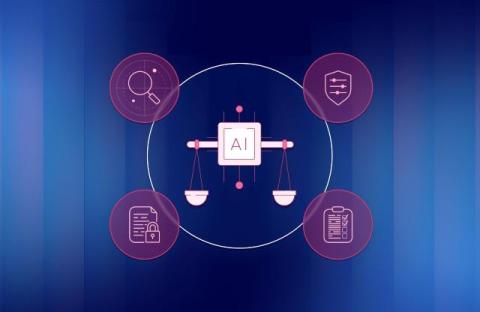
Agentic AI Security: Visibility and Control for AI Agents at Work

Security teams have spent years tracking what employees do with data. The harder problem now is tracking what agents do on their behalf. AI agents, whether running in an IDE, installed locally on a laptop, or connected to internal data through a model context protocol (MCP) server, operate with the permissions of the user who deployed them. They read files, query databases, call external APIs, and generate outputs. And in most enterprise environments, security teams have no reliable way to see any of it.

Simplifying industrial cybersecurity in a time of rising risk

Manufacturers face a trio of converging challenges: Cyberthreats are escalating, regulations are tightening, and operational environments are becoming more complex. The traditional approach to operational technology (OT) security is no longer working. Manufacturers need to respond by moving toward platform-based cybersecurity to reduce risk and improve resilience. An ARC Advisory Group report published in April 2026 provides details.

The $10 Million Question: Why Are 81% of Organizations Still Getting Breached?

We are living in a security paradox. Cybersecurity budgets are increasing, security stacks are growing more complex, and yet, the needle barely seems to move. According to the newly drafted 2026 Cyberthreat Defense Report (CDR), 81% of organizations experienced at least one successful cyberattack this past year. Even more concerning, the number of organizations suffering from six or more successful attacks is actually creeping up.

What is LearnDash? How does learnDash work in SSO?

LMS or Learning Management System is an e-learning technology that enables institutions or organizations to spread their courses virtually across the globe without the physical effort required in classrooms. It also allows the user to configure their content suited for their clients. LearnDash is trusted to control the learning programs for significant colleges, little to average size organizations, new companies, business people, and bloggers around the world.

Keycloak SSO with WordPress | Keycloak SAML Single Sign-On (SSO)

Keycloak isn't just another Identity Provider, it's a comprehensive open-source solution that handles authentication, authorization, and user management across your entire tech stack. When integrated with WordPress through SAML, it creates a seamless Single Sign-On (SSO) experience that eliminates password fatigue while giving you granular control over user access. Here's how to make it work for your organization.

How Single Sign-On (SSO) Makes Your WordPress Site Safer and Easier to Use?

Your WordPress site is more than just a website; it's the heart of your online presence. Keeping it secure and running smoothly is key to providing a reliable user experience. One way to simplify access and strengthen your site’s security is by using SAML Single Sign-On (SSO). But what exactly is SAML SSO, and how can it help protect your WordPress site? Let’s break it down.

Meet GitGuardian's AI Assistant: Natural Language Queries Across All Your Incidents

See how the GitGuardian Assistant helps teams investigate, understand, and remediate secret incidents directly from the GitGuardian workspace. In this preview, Mathieu and Dwayne walk through how the assistant uses incident context, workspace details, and GitGuardian documentation to answer questions, suggest next steps, and help manage incidents through natural language. It can explain threat patterns, assess scope and impact, recommend remediation steps, assign incidents, update tags, and propose changes to incidents.

How Attackers Use Developer Machines to Breach the Software Supply Chain - May 07, 2026

In April, three major supply chain campaigns hit npm, PyPI, and Docker Hub in just 48 hours, and while the ecosystems were different, the objective was the same: steal credentials from developer environments and CI/CD pipelines. The malware targeted API keys, cloud credentials, SSH keys, GitHub tokens, npm tokens, environment variables, and more, turning developer machines and build systems into high-value credential vaults for attackers.

The Partnerships Taking on AI Security: Daniel Bernard, CrowdStrike Chief Business Officer

The previous episode of the Adversary Universe podcast explored the “vuln-pocalypse” and the implications of advanced AI models accelerating vulnerability discovery and exploitation. Now, we’re diving into how companies are working together to face these evolving security risks. CrowdStrike Chief Business Officer Daniel Bernard spends much of his time talking with partners and customers about how to address their growing concerns: Is their business protected? Do they know which vulnerabilities are in their environment? What do they do about them?

Episode 14 - Harvest Now, Decrypt Later: The Shift to Post-Quantum Cryptography

The emergence of quantum computing has introduced a definitive expiration date for classical encryption, fueling a "harvest now, decrypt later" strategy among sophisticated nation-state actors. In this episode, Vince Stoffer joins Richard Bejtlich to demystify Post-Quantum Cryptography (PQC) and explain why organizations must move beyond a "set it and forget it" mentality regarding their encryption standards.