Security | Threat Detection | Cyberattacks | DevSecOps | Compliance

Free CCPA Vendor Questionnaire Template (2023 Edition)

Often regarded as the Californian version of the General Data Protection Regulation (GDPR), the California Consumer Privacy Act (CCPA) aims to protect the personal information rights of Californian-based employees, contractors, customers, and vendors. The inclusion of third-party vendors means your Vendor Risk Management program needs to be updated to include CCPA compliance tracking, not only during due diligence but through the entire vendor security posture management process.

CloudCasa Partners With Clastix To Ready Namespace-as-a-Service For Mass Adoption

With Kubernetes, companies have the ability to spin up applications with the click of a button or a declarative one-line command statement. As they spin up the services, they are hosting them within clusters, but they do not really want to deploy multiple clusters for each application or service that they’re looking to host within their website or within their application.

Surveillance: Balancing Fundamental Rights and Personal Privacy

In this thought-provoking video, we delve into the intricate debate surrounding the nature of surveillance and its impact on our fundamental rights. Join us as we examine the arguments that bring us back to square one: the tension between personal privacy and the necessity of surveillance. While some may assert their right to privacy, others argue for the benefits and advantages that surveillance can offer. We explore the influence of AI in optimizing advertising and how it creates a feedback loop of data, leading to targeted ads that seem to anticipate our every move.

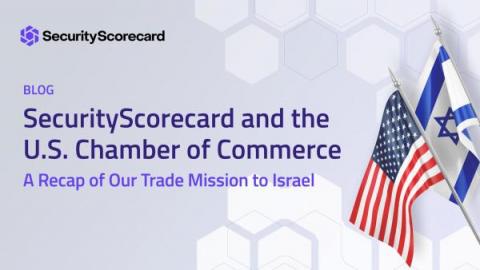
SecurityScorecard and the U.S. Chamber of Commerce

This week, SecurityScorecard is participating in the US Chamber of Commerce’s Cyber Security Trade Mission to Israel. This has been a valuable experience to not only share our cybersecurity knowledge, but to learn more about Israel’s cybersecurity efforts, and those of other countries.

Reality of Cyber Warfare

Welcome to the Razorwire podcast. In this episode, we explore cyber warfare. We discuss the challenges of defending against cyber attacks and the power imbalance between nations in the cyber domain. We have some fantastic guests on this week who know a thing or two about this: Oliver Rochford and Victor Acin shed some light on the issue of plausible deniability and the potential consequences of our lack of preparedness for defence in critical infrastructure.

Five Tips for Using SBOMs to Boost Supply Chain Security

A Software Bill of Materials (SBOM) is a key cyber defense item — it identifies what’s in your software, applications, and code base so that you can detect and mitigate risk more effectively. This is useful when it comes to application security because companies can only detect and fix vulnerabilities if they know what’s there in the first place. SBOMs give you that visibility. Consequently, SBOMs are now a “must-have” tool for most companies.

Threat Detection In 2023 Is Broken. Here's How to Fix It

Why have cyber incidents topped the Allianz Risk Barometer for the last two years in a row? Growing attack surfaces are partly responsible. Remote work, cloud migration, IoT use and other trends give cyber threats more places to enter and hide within networks. But there is another cause – deficiencies in the standard approach to threat detection and response.

Proxy Servers: An Overview and Comprehensive Guide

While web browsing is a common activity, it seldom ensures privacy. Given the pervasive tracking mechanisms employed by websites and applications, individuals and businesses are turning towards proxy servers to safeguard their privacy. One can consider residential proxies as the foremost line of defense in maintaining online anonymity. However, proxy servers do more than just conceal your online identity; they offer an array of benefits that enable you to explore the internet without inhibitions.