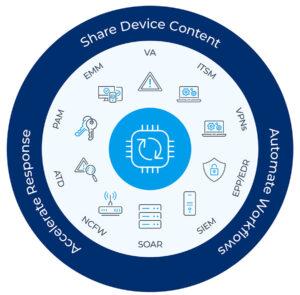
Tanium Unveils Total Experience for ServiceNow
New integration creates exceptional shared experiences by converging IT staff, employee, and customer experiences that deliver superior operational outcomes and accelerated growth.


In today’s rapidly evolving threat landscape, cybercriminals have become more sophisticated than ever, making it crucial to stay abreast of the latest trends and tactics. The challenge is exacerbated by the expanding attack surface as more devices and device types connect to enterprise networks: IT, OT, IoT and IoMT devices, all with known vulnerabilities that can be exploited.
Whether it is reporting a phishing email or something that might be illegal that a coworker is doing, your employees should be a strong last line of defense for security and compliance. According to Gartner, almost 60 percent of all misconduct that is observed in the workplace never gets reported. For decades both compliance officers and security leaders have known that the earlier employees report incidents, the lower the risk. Yet low reporting rates continue to be a problem.
Russia’s APT28 (also known as “Fancy Bear” or “BlueDelta”) is using spear phishing to compromise Ukrainian government and military entities, according to researchers at Recorded Future. The phishing emails are designed to exploit vulnerabilities in the open-source webmail software Roundcube.
We just introduced what we believe is a unique application of real-time, deep learning (DL) algorithms to network prevention. The announcement is hardly our foray into artificial intelligence (AI) and machine learning (ML). The technologies have long played a pivotal role in augmenting Cato’s SASE security and networking capabilities, enabling advanced threat prevention and efficient asset management. Let’s take a closer look.
The DoJ launches a cyber unit to prosecute nation-state threat actors, cybercriminals use expired AWS S3 buckets to distribute malicious code, and a new exfiltration malware targets RDP workloads.