Security | Threat Detection | Cyberattacks | DevSecOps | Compliance

Securing CI/CD pipelines with 1Password Service Accounts

Attention developers and DevOps teams! Today we’re excited to announce that 1Password Service Accounts are now generally available to all users. Whether you’re a growing startup, a thriving mid-size company, or a sprawling enterprise, service accounts offer a secure, automated way to access infrastructure secrets exactly where they’re needed.
Mimic your mental model with Project Collections

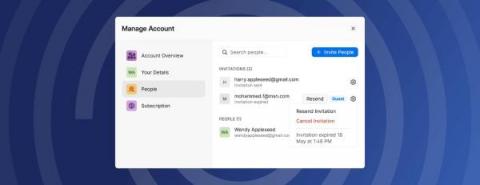
At Snyk we’re constantly trying to improve how you can work with Projects at scale. To continue the journey, we’ve been furthering how you can organize your Projects. There are nearly limitless ways to organize projects outside of Snyk because there is no standard mental model that is used by everyone, for example, some organize projects as mono-repos, and others as application components.

Webinar: Next on Your Identity Security Plan - ITDR & Zero Trust Enablement

You’ve probably heard about XDR, but do you know ITDR? ITDR is short for identity threat detection and response, a new class of capabilities designed to protect identities. Zero Trust is an information security model that denies access to applications and data by default. ITDR and zero trust are two important models that organizations must get familiar with to embrace an identity-first security approach.

The 443 Podcast - Episode 248 - RepoJacking

On this week's podcast we discuss a recent analysis on the risks of GitHub RepoJacking. After that, we dive in to the Barracuda 0-day that China-based threat actors are actively exploiting as well as a novel command and control distribution method for a separate China-based APT. You can view more information on the CISA guidance as well as Blaze Lab's full blog post at the links below: The 443 Security Simplified is a weekly podcast that gets inside the minds of leading white-hat hackers and security researchers, covering the latest cybersecurity headlines and trends.

What is Security as Code and How to Get Started Implementing it

Modern companies are rapidly adopting cloud applications and services due to scalability, cost savings, and faster time to market. DevOps teams and developers must deliver fast, secure code while protecting secrets and log files, creating a growing concern over the security risks of this digital transformation. According to a recent report, more organizations are adopting security as code (SaC) practices, with 62% of respondents citing it as a priority.

How SMBs Can Build an Effective Risk Management Plan

As the Chief Information Security Officer (CISO) at Arctic Wolf, I have a deep bench of security experts I can leverage to provide the organization with robust risk management, threat detection, security awareness training, and incident response. That’s an advantage that small businesses often don’t have.

The Speed of Security & AI

ThreatQuotient’s Perspective on Security Operations and vision for AI in the ThreatQ Platform We’re all familiar with the “speed of cybersecurity”, the rapid pace at which cyber threats evolve and the corresponding need for timely and agile defense measures. We’ve been trained to understand the importance of quickly detecting, analyzing, and mitigating cyber risks to stay ahead of attackers and protect assets in an increasingly dynamic and interconnected world.

The Importance of the Golden Thread to Safely Design and Construct Buildings

Following the Grenfell Tower tragedy, the UK government commissioned Dame Judith Hackitt to conduct an independent review of building regulations and fire safety. In her report, "Building a Safer Future," Dame Judith proposed the use of a "Golden Thread" as a tool for managing buildings as holistic systems and enabling people to design, construct, and operate their buildings safely and efficiently.

Netskope Uses AI to Help Protect Sensitive Data Stored in Amazon S3 by AWS AppFabric

Spending for software-as-a-service (SaaS) applications is projected to grow 17.9% to $197 billion in 2023, then grow another 17.7% to $232 billion in 2024. This rapid growth is being fueled by several factors including the desire to modernize IT environments and enable hybrid workers, who might login from a branch office one day and a hotel room the next.