Security | Threat Detection | Cyberattacks | DevSecOps | Compliance

Intelligent workflows: SAP's approach to SOAR in the AI era

Join SAP’s CISO and Tines’ Co-founder for a conversation on how SAP is modernizing its SOAR workflows and building an AI SOC capability with Tines. As SAP scales its global enterprise cloud services, the security team is taking a new approach to workflow automation: combining deterministic playbooks with intelligent, AI-assisted workflows that improve speed, accuracy, and visibility across security operations.
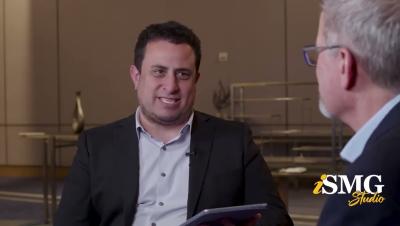
When AI writes code, who fixes the flaws?

Veracode's Chief Security Evangelist Chris Wysopal on AI's Coding Secret: 45% of Code Has Vulnerabilities Chris (aka @WeldPond), Wysopal, a veteran in application security and former member of the legendary L0pht hacker group, shares practical insights on shifting security left while embracing AI-powered development. Whether you're a CISO, AppSec leader, or developer using Copilot/GitHub Copilot, Claude, or other AI coding assistants, this discussion will change how you think about secure AI adoption.

Insider Threats in the Age of AI: What Security Teams Need to Know

Artificial intelligence has gone from buzzword to business tool almost overnight. Employees are rapidly adopting platforms like ChatGPT, Gemini, and Copilot to draft content, analyze data, brainstorm code, and accelerate productivity. But as AI becomes embedded in everyday workflows, a new category of insider threat is emerging—one that is harder to detect, harder to classify, and potentially more damaging than anything security teams have faced before.

Comparing Best NER Models for PII Identification

Identifying and redacting personally identifiable information (PII) is a critical need for enterprises handling sensitive data. Over 1000 NLP models and tools claim to solve this problem, but an infinite number of options opens a paradox of choice. We compiled this comprehensive comparison that examines notable PII detection solutions – their features, use cases, pros/cons, and reported success rates.

Hacked Architecture, Not Code: What is a Business Logic Attack? #businesslogic #cybersecurity

Why do hackers ignore your firewalls and clean code? Because they exploit your business logic and application architecture. A Business Logic Attack (BLA) is a sophisticated manipulation that uses your own system's design against you. Learn the key difference between code flaws and architectural exploits.

Agentic AI and Identity Sprawl: The Convergence Redefining Cyber Risk

Welcome to Data Security Decoded. In this episode, Caleb Tolin welcomes back Joe Hladik, Head of Rubrik Zero Labs, for a focused look at how identity-driven threats are redefining modern security. Drawing insights from Rubrik Zero Labs’ latest report, Identity Crisis: Understanding and Building Resilience Against Identity-Driven Threats, Joe explains why identity has become the new perimeter in an era where hybrid and multi-cloud environments dominate.

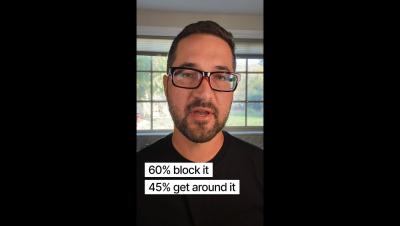
The Shadow AI Disconnect CISOs Need to Know

Our new State of Shadow AI Report has just uncovered a critical disconnect that all security leaders need to be aware of. We all know shadow AI is exploding, and that blocking is the most logical response. How else are you going to regain control? But our data shows this is backfiring: This is where blocking can get dangerous. It doesn't stop AI; it just limits your visibility. Download the full (ungated) shadow AI report to see all the data.

From Cloud to Code: Salt Cloud Connect Now Scans GitHub

One of our most-loved features is Salt Cloud Connect. In a world of complex deployments, it’s a breath of fresh air: an agentless discovery model that delivers under 10-minute deployment and rapidly gathering API-specific info in cloud platforms. Customers plug it in, and in minutes, not weeks, they get a “traffic-free”, complete inventory of their APIs across AWS, Azure, GCP, Kong, and Mulesoft. This “ease of use” provides a “wow” moment of immediate visibility.

Obrela joins the discussion on the future of NATO's cloud security

Drawing on Obrela’s experience managing complex cyber incidents and supporting national-level assurance programmes, Sebastian Bocquier, Head of DFIR, will present a practical, mission-ready framework that shifts accreditation from a static, one-time checkpoint to a continuous assurance capability embedded throughout NATO’s cloud ecosystem.