Security | Threat Detection | Cyberattacks | DevSecOps | Compliance

Comparing NER Models for PII Identification

Identifying and redacting personally identifiable information (PII) is a critical need for enterprises handling sensitive data. Over 1000 NLP models and tools claim to solve this problem, but an infinite number of options opens a paradox of choice. We compiled this comprehensive comparison that examines ten notable PII detection solutions – their features, use cases, pros/cons, and reported success rates.

Admin MCP

Apono announces the launch of our Admin MCP (Model Context Protocol), a new tool that simplifies organizational access management through natural language queries. The product works with MCP-supported clients like Claude and Cursor, allowing administrators to quickly answer access questions without manually navigating through dashboards and permissions. This demo shows how users can instantly check if someone can access database resources or get comprehensive audit reports for AWS production accounts.

Egnyte Collaborates With Microsoft to Power Enterprise AI With Microsoft Agent 365

Egnyte is excited to announce a new collaboration with Microsoft, integrating Egnyte’s data governance and secure collaboration expertise with Microsoft Agent 365 for AI agents. This collaboration is designed to transform how organizations empower their employees, enhancing productivity and decision-making through secure, governed AI. The enterprise landscape is rapidly evolving.

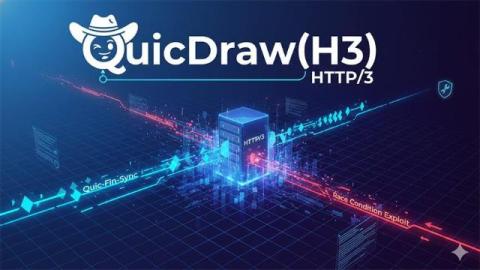
Racing and Fuzzing HTTP/3: Open-sourcing QuicDraw(H3)

This blog post provides a dive into HTTP/3’s evolution for security engineers, an overview of our research journey, and what led us to develop the open-source tool QuicDraw, which can be used for fuzzing and racing HTTP/3 applications. QuicDraw implements “Quic-Fin-Sync” our implementation of the last-byte-sync with the single packet attack on HTTP/3. We conclude by evaluating QuicDraw’s performance against a real-world target and comparing its results to other tools.

Trust at enterprise scale: Introducing Vanta's Agentic Trust Platform

Building trust is critical for today’s most ambitious businesses. Why? Because companies viewed as trustworthy grow up to four times faster. Yet earning and proving trust remains harder than ever. ‍ As organizations scale, their attack surfaces grow—and so do their tech stacks. Every new tool meant to increase security often fragments it, leaving teams buried in overhead and blind spots.

Attackers are integrating LLMs directly into malware #cybersecurity #ai #malware #infosec #podcast

Threat actors have moved beyond using AI to speed up operations. They're now embedding large language models directly into malware. In this Intel Chat, Matt Bromiley and Chris Luft discuss Google's Threat Intelligence Group findings on malware families like PromptFlux and PromptSteal. These threats query LLMs mid-execution to dynamically alter behavior, obfuscate code, and generate system commands on demand.

GPT5 Pulls Ahead on Secure Code While Rivals Stall

AI coding assistants are evolving quickly. But are the latest models any better at writing secure code? Our October 2025 analysis brings fresh data on how newer large language models (LLMs) stack up against their predecessors, and the results reveal both progress and persistent gaps. This update builds on our July 2025 GenAI Code Security Report, which tested over 100 LLMs across four major programming languages.

Why 95% AI Fails #shorts #ai

AI On The Edge – Where Intelligence Meets Risk: Part 3 Building an enterprise AI app is NOT the same as building a traditional application, and this is why so many AI projects fail. In this conversation, we break down why 95% of enterprise AI implementations fail, what teams misunderstand about AI systems, and how to actually build AI that works in real organizations.

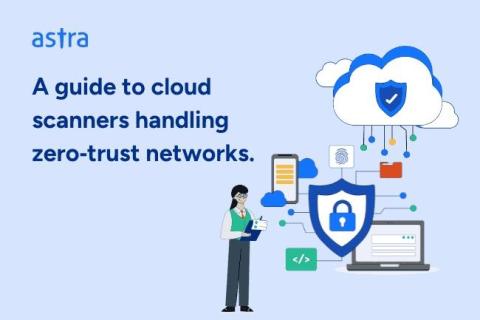
How do Cloud Scanners Handle Zero Trust Security?

The global zero trust security market was valued at USD 19.2 billion in 2024 and is expected to grow at a CAGR of over 17.4% between 2025 and 2034, driven by rising cybersecurity threats. This explosive growth is a direct reflection of the fundamental change in how organizations think about security.

How Private Investigators Partner With Ethical Hackers to Uncover Cybercrime

Internet anarchy is quick and at times it seems that the web has a few too many dark corners. Cybercriminals are aware of how to conceal themselves under unrealistic profiles, concealed IP addresses and vanishing messages. Expert strategy is introduced by the private investigators, yet digital trails may become complicated. This is where the ethical hackers come in and with added technical expertise, they manage to figure out the missing traces, lost data and the actual identities. The pair of them form a good team to reveal the truth, record evidence, and safeguard victims.