Security | Threat Detection | Cyberattacks | DevSecOps | Compliance

Securing the Battleground: Moving Beyond Legacy Barriers to Zero Trust for IoT and OT IAM

Identity and Access Management (IAM) is rapidly emerging as the next battleground in industrial cybersecurity. As connectivity increases in operational technology (OT) and IoT environments, the complexity of securing machine and human identities grows. Legacy systems, cultural resistance, and the tension between uptime and security controls make IAM adoption a major challenge for operators.


Secure AI at Machine Speed: Defending the Growing Attack Surface

As AI becomes embedded across the enterprise — from customer-facing tools to backend automation — it dramatically expands the enterprise attack surface. Models, agents, apps, and data pipelines now span public and private clouds, SaaS, and edge environments, creating a sprawling, opaque risk landscape.

Challenges in Ensuring AI Data Privacy Compliance [& Their Solutions]

What happens when the AI feature you shipped last quarter is compliant in one region—but illegal today in another? That’s the new normal. In 2025, the EU AI Act, new U.S. state privacy laws, China’s PIPL, and APAC rules are reshaping how organizations collect, process, store, and share data for AI. Privacy isn’t a back-office task anymore; it’s a front-line guardrail for product, security, and data teams.

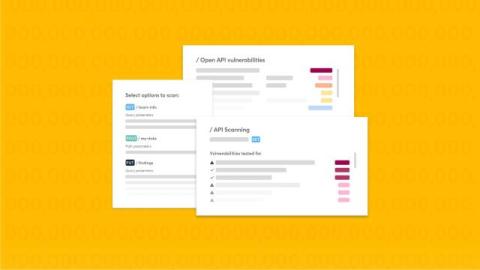
Introducing Dynamic API Scanning

Application environments are more complex than ever, with APIs forming the critical connective tissue. But this proliferation has created a vast, often invisible, attack surface. Security teams are caught in a difficult position: compliance frameworks like PCI and SOC 2 demand API scanning, but offer little guidance. Meanwhile, you’re grappling with incomplete API inventories, and the market is a confusing mix of expensive, hard-to-instrument niche tools.

Securing cloud console and CLI access for agile software development

Fast-moving cloud environments demand speed, but without the right access controls they invite risk. Resources such as virtual machines, containers, and services are created, modified, and terminated at a rapid pace. At the same time, workloads are becoming increasingly distributed, with data and applications spanning multiple regions, accounts, and even across different cloud service providers (CSPs).

Beyond the Hype: The Veracode AI-Advantage in Application Security

For years, the cybersecurity industry has hyped AI as a game-changer, but what vendors often delivered was basic machine learning driven or simple predefined rules. The rise of ChatGPT and similar tools dramatically reshaped the landscape, prompting vendors to hastily identify real AI use cases in their offerings.

Illuminate AI Adoption with AIBOMS

An AI Bill of Materials (AIBOM) addresses this gap. It is a concise, living profile for every AI capability an organization can invoke—models, agents, SaaS features, plug‑ins, and APIs. Kept in a machine‑readable format, it serves as a practical record that can inform runtime decisions in a control plane. An AIBOM summarizes five things about each AI capability: who provides it, what it can do, what data it sees, where it runs, and how it should be treated.

How Device Intelligence Detects Fraud Without Using Personal Data

Fraud tactics now evolve on an hourly cycle. For banks, fintech, digital lenders, and payments players, the question isn't whether rules still help - it's whether they adapt fast enough. Recent numbers from Alloy's 2024 Financial Fraud Statistics underscore the shift: over 50% of surveyed institutions saw business fraud rise, two-thirds reported higher consumer fraud, and generative AI could drive $40B in bank losses by 2027. It's no surprise that more than half are raising third-party spend, with three in four prioritizing identity risk capabilities.

Ignite Creativity Using AI Image Generation Technology

In today's digital landscape, visual content has become paramount, with studies showing that posts with images receive 352% more engagement than those without. Yet, creating professional-quality visuals remains a significant challenge for many content creators, demanding substantial time, resources, and expertise. Innovative solutions like Kling AI are revolutionizing the way we create visual content. By harnessing the power of advanced artificial intelligence, creators can generate stunning, professional-grade images in minutes rather than hours.