Security | Threat Detection | Cyberattacks | DevSecOps | Compliance

Why Too Dangerous to Release AI is a Lie

Calling a model too dangerous to release ignores the obvious reality that open and alternative models will soon reach similar capability. Once the path is visible, other providers, including overseas competitors, will build their own versions, so secrecy becomes a temporary market move, not a lasting safety strategy.

Best AI Security Vendors in 2026

Something fundamental changed in the last twelve months. Employees went from asking AI questions to handing it the keys to enterprise data. AI agents now read email, ship code, and query databases, and increasingly, they act without a human in the loop. Security teams evaluating AI security vendors in 2026 are not shopping for the same category they were in 2023. The threat model has changed. The vendors have not all kept pace.

Surviving the Vulnpocalypse: How to Prepare for the AI-Driven Security Reckoning

The cybersecurity landscape is facing an unprecedented shift, and industry experts are sounding the alarm about what many are calling the “vulnpocalypse.” This isn’t just another security buzzword or overhyped threat. It represents a fundamental transformation in how vulnerabilities are discovered, exploited, and defended against in the age of artificial intelligence.

What Is Zero Trust AI Access (ZTAI)?

Zero Trust AI Access (ZTAI) is a security framework that applies “never trust, always verify” principles to every interaction involving AI systems, including LLMs and AI agents, as well as the sensitive data they process. Traditional zero trust was built to protect people accessing applications. ZTAI extends those same principles to a new category of actor: AI itself.

The AI attack surface with Katherine McNamara

Join us for this week's Defender Fridays as Katherine McNamara, Cybersecurity Technical Solutions Architect at Cisco, breaks down the expanding attack surface of AI and ML systems and what organizations need to do to secure them before it's too late. At Defender Fridays, we delve into the dynamic world of information security, exploring its defensive side with seasoned professionals from across the industry. Our aim is simple yet ambitious: to foster a collaborative space where ideas flow freely, experiences are shared, and knowledge expands.

AI Agents are moving your sensitive data: Nightfall built a solution where DLP fails

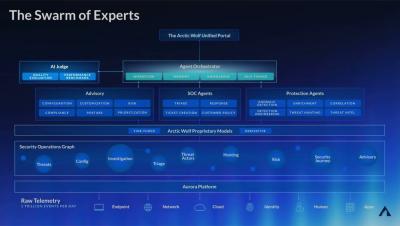
Somewhere in your environment right now, an AI agent is reading files, querying a database, and passing output through a channel your DLP has never seen. It's running under a legitimate user credential, inside a sanctioned tool, and it will not trigger a single alert. When it's done, there will be no record of what it accessed or where that data went. This is not an edge case. It is the default state of most enterprise environments in 2026.

This Is How Red Teams Actually Use AI Security Data #aisecurity #redteam #threatintelligence

The volume of AI security research is now too high for any human to track properly by hand. The practical answer is using AI to filter AI, reducing hundreds of articles and reports into a daily shortlist so analysts spend their time on signal instead of noise.

1 in 15 MCP Servers are Lookalikes: Is Your Org at Risk?

Researchers recently analyzed 18,000 Claude Code configuration files pulled from public GitHub repositories. What they found was straightforward and alarming: developers are already installing mistyped, misconfigured, and near-identical MCP server names — often without realizing it. The human-error condition that makes typosquatting work was already present at scale before any attacker needed to exploit it.

You Can't Secure AI Agents You Haven't Found

Most organizations have a reasonable handle on their sanctioned SaaS apps. Model Context Protocol - hit 10,000 public servers within a year of launch, with 97 million monthly SDK downloads. None of those numbers capture the servers your developers configured locally. Those don't appear in any registry. They were added at the IDE level, one developer at a time, with no approval step and nothing that touches a central system. That's the inventory problem. It comes before any question of enforcement.

MCP: The AI Protocol Quietly Expanding Your Attack Surface

In February 2026, researchers uncovered something that should give every security leader pause. A malware operation called SmartLoader, previously known for targeting consumers who downloaded pirated software, had completely pivoted its infrastructure. SmartLoaders new target was developers, and its new entry point was a protocol most security teams had never heard of. The payload delivered to victims: every saved browser password, every cloud session token, every SSH key on the machine.