Security | Threat Detection | Cyberattacks | DevSecOps | Compliance

AI Chatbots Aren't Taking Your Jobs: They're Your New Assistants

I have never been one to jump on most technology bandwagons early; I am very pragmatic about what technology can do rather than what it promises. This extends to generative AI. I was not the first to play with ChatGPT and Gemini when they came out in the early 2020s. Maybe it’s because I work in fields that use machine learning very effectively. Even though I was aware of the leap Google made in 2012, I wasn’t eager to dive into the new wave of AI when it first appeared.

Secrets, out: Why workload identity is essential for AI agent security

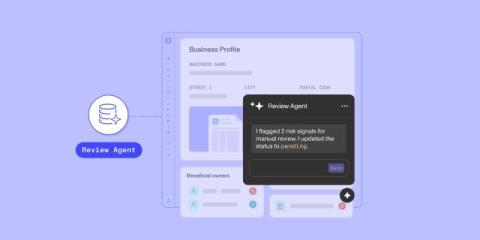
AI agents aren’t waiting in the wings anymore. They’re approving payments, spinning up cloud resources, and pulling sensitive data at machine speed. Blink, and a swarm of them has already acted a thousand times before anyone can check the logs. But with all that speed and capability comes risk. For many teams, it’s the authentication model—not the tech—that’s breaking.

Data Sovereignty in the Age of AI: Why It Matters and How to Get It Right

Data sovereignty means that data is subject to the laws and governance of the country where it is stored or processed. In simpler terms, if your AI system stores user data in Germany, you’re bound by EU’s GDPR rules — even if your company operates from the U.S. As AI and large language models (LLMs) become central to business operations, data sovereignty is no longer just a compliance checkbox.

Agentic AI Ransomware: What You Need to Know

Brace yourself for agentic AI ransomware. It's a terrifying fusion of cutting-edge tech and malicious intent that's set to redefine cyber threats as we know them. Unlike traditional ransomware, which follows pre-programmed rules, agentic AI ransomware can adapt its behavior in real-time based on its environment and the defenses it encounters.

Cybersecurity Trends in 2026: From AI Defense to Digital Trust

In 2026, cybersecurity has evolved from being an IT concern to becoming one of the most strategic levers of global stability. As artificial intelligence systems become self-learning, quantum computing moves closer to commercialization, and consumer data flows multiply across platforms, cybersecurity is no longer about preventing attacks-it's about maintaining trust in an increasingly automated world.

AI Sidebar Spoofing Attack: SquareX Uncovers Malicious Extensions that Impersonate AI Browser Sidebars

SquareX released critical research exposing a new class of attack targeting AI browsers. The AI Sidebar Spoofing attack leverages malicious browser extensions to impersonate trusted AI sidebar interfaces, which is used to trick users into executing dangerous commands that can lead to credential theft, device hijacking, and password exfiltration.

Seeing the Invisible: Visualizing and Protecting AI-Agent Activity with Exabeam & Google

Artificial intelligence is no longer just an emerging technology in security operations and modern SIEMs. AI agents now enrich alerts, drive investigations, generate reports, and increasingly act as extensions of human analysts. But as with any powerful technology, new risk surfaces follow. From the Exabeam perspective, every entity in your environment deserves protection.

Is ChatGPT Safe? Understanding Its Privacy Measures

“Is ChatGPT safe” is the headline question that nearly every team asks the moment AI enters the room. The better version is: safe for what, and under which controls? Safety is not a single switch. It combines technical security, data privacy, content safeguards, governance, and how your people use the tool. This guide breaks down how ChatGPT handles data, where privacy risks actually come from, and the practical steps to operate safely at home and at work.