Security | Threat Detection | Cyberattacks | DevSecOps | Compliance

Observability and Security for the AI Era

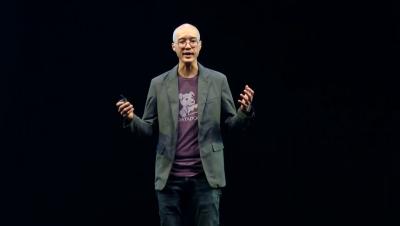
Datadog has always been driven by a broader vision of helping teams understand and operate complex systems. In this session, you’ll hear from Yrieix Garnier, VP of Product, and Hugo Kaczmarek, Senior Director of Product, as they share the latest updates across the Datadog product suite and discuss how that vision continues to shape the platform’s evolution and support the next generation of AI-driven applications.

AI Agents Now Rank With the Top 3 Hacking Teams: Chema Alonso

In this episode of This Week in NET, host João Tomé is joined by Chema Alonso, Vice President and Head of International Development at Cloudflare. Chema shares how a 1998 paper on SQL injection launched his career in hacking, his path from running a startup in Madrid to becoming a Microsoft MVP for 14 years, and how he ended up leading cybersecurity at Telefónica for more than a decade — after telling them “you don’t have enough money to make me work for you.” He also explains why he left Telefónica in 2025 to join Cloudflare, and what surprised him about the company’s technical depth.

RBAC vs CBAC: Key Differences, Benefits, and Which One Your Business Needs

When businesses grow, managing who can access what becomes serious business. One wrong access permission can lead to data leaks, compliance penalties, or financial damage. In fact, IBM’s Cost of a Data Breach Report 2024 found that the average global data breach cost reached $4.88 million, the highest ever recorded. These numbers necessitate the requirement of having strong access control in place.

The Emerging Security Risks of Agentic AI

AI is moving fast. But the transition from GenAI tools that respond to prompts to AI agents that execute workflows represents something qualitatively different for security leaders. The shift goes beyond just scale, and is a fundamental change in how data moves, who touches it, and what decisions get made, often without human review.

How Adaptive Email Security Helps Navigate Threats in the Age of AI

A finance employee receives an email that appears to come from the CFO requesting urgent payment approval. The message references a current project, uses the correct tone, and arrives at a plausible time. However, the email wasn’t written by a colleague — it was generated by AI. And it contains a malicious link. These attacks are becoming more common as threat actors use AI to produce convincing phishing emails, automate impersonation attempts, and launch social engineering campaigns at scale.

RSA 2026: The Shift Toward Security FOR AI

RSA Conference 2026 made one thing clear very quickly. Security leaders are done with generic AI pitches. After two years of relentless “AI everything,” the market is now pushing back. There is a growing fatigue with vague promises, surface-level features, and what many are calling outright AI washing. The result is a trust gap. What cut through this year was not another AI-powered detection claim. It was a much more grounded question.

How AI Dash Cams are Revolutionizing Fleet Safety in 2026

Road safety has changed a lot in the last few years. Trucks and vans now carry smart sensors that watch the road better than humans. This shift protects drivers and other people on the street. Managers can see what is happening in the cab and on the street at the same time - this new tech keeps drivers safe. It provides a clear view of daily operations. The data helps businesses save money and stay on schedule.

Securing Agentic AI: Why Visibility, Behavior, and Guardrails Matter

Agentic AI is quickly transitioning from experimentation to production. Enterprises are deploying AI agents to interpret goals, decide what actions to take, interact with business tools and APIs, and execute those actions autonomously, with limited or no human oversight. The promise is speed and efficiency, but the proverbial “blast radius” is bigger and fundamentally different from anything security teams have managed before.

Why Your AI Workflow Should Never Depend on a Single Model

Network engineers have long understood redundancy. Redundant power, redundant links, redundant clusters. The reasoning is simple: any single component that can fail, will. But AI introduces a category of failure that most infrastructure teams have not yet built defenses against. Unlike hardware, AI models can become unavailable for reasons entirely outside your organization's control.