Security | Threat Detection | Cyberattacks | DevSecOps | Compliance

AI is already embedded in our everyday tools, often without us realizing it. | UpGuard #ai

“AI is already embedded in our everyday tools, often without us realizing it. That changes how security teams need to adapt.” Hear from Randy Vickers, Deputy CISO at the National Student Clearinghouse, in this fireside chat from UpGuard Summit 20, as he shares how his team is staying ahead of AI’s evolving role in cybersecurity.

The Real AI Agent Risk Isn't Data Loss. It's Unauthorized Action.

Your AI Agent just updated a vendor’s payment details in your Enterprise Resource Planning (ERP) system based on a seemingly harmless prompt. No data was exfiltrated. No access policy was violated. But now, a $250,000 payment is sitting in a fraudulent bank account. This is the new face of AI risk. As enterprises adopt AI Agents - either off the shelf or custom built, security teams are facing a fast-moving shift.

Force multiply your team and monitor your entire program with Vanta's AI-powered Trust Management Platform

As your security and compliance program matures, so does your need for visibility and control. Internally, teams need a centralized view—a single place to monitor progress, align on priorities, and collaborate across functions. But during an audit, not everything needs to be shared with your auditor. ‍ Yet, most GRC tools aren’t built to make that distinction.

How AI Is Redefining Fraud Detection

Card fraud is escalating at an alarming rate, with no signs of slowing down. In a world where digital payments have become the norm, almost everyone, consumers, businesses, and financial institutions, finds themselves at risk. The convenience of card payments has made them an essential part of daily life, but it has also paved the way for sophisticated fraud schemes. For businesses, the stakes are even higher.

Charlotte AI - Agentic Workflows: Data Egress Pattern Analysis

Sensitive data moves in and out of your organization every day. But how do you know when routine becomes risky? With Charlotte AI Agentic Workflows, CrowdStrike helps you fast-track the hunt for suspicious file activity—so you don’t have to. From after-hours uploads to unsanctioned cloud storage, Charlotte AI helps you analyze file movement across your environment. By reviewing Falcon Data Protection events, applying a foundational model, and generating a structured, actionable report, this demo shows how agentic automation brings clarity to chaos—no log diving required.

We're Building Cars While Driving Them" - AI's Wild West Problem

Is anyone setting standards for AI? Researcher Gabriele Hibbert delivers the perfect metaphor for our current AI moment: "We're building the cars while driving them." Her solution? Creating standardized "nutrition labels" for AI tools that can evolve with the technology. The first step toward taming the AI Wild West.

Falcon Exposure Management AI Asset Criticality: Demo Drill Down

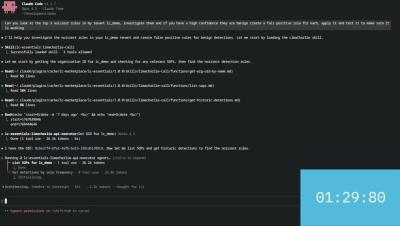
Security teams are overwhelmed by thousands of assets and alerts, with no clear path to prioritize what matters most. Falcon Exposure Management’s AI Asset Criticality feature delivers scalable, intelligent asset classification powered by human insight and machine learning. This demo shows how teams can move from manual tagging to AI-driven prioritization, helping them focus on critical risks, sharpen attack path analysis, and stay ahead of threats.

OpenAI Report Describes AI-Assisted Social Engineering Attacks

OpenAI has published a report looking at AI-enabled malicious activity, noting that threat actors are increasingly using AI tools to assist in social engineering attacks and influence operations. In one case, the company banned ChatGPT accounts that were likely being used in North Korean attempts to fraudulently obtain jobs at US companies. “Similar to the threat actors we disrupted and wrote about in February, the latest campaigns attempted to use AI at each step of the employment process.

Beyond Plain Text: Egnyte's Journey to Structured Data Extraction in RAG Systems

When we first launched Egnyte’s AI features built on retrieval-augmented generation (RAG), customer response was overwhelmingly positive. Users could quickly find and synthesize information from vast document repositories with accuracy and context. But success breeds ambition. As customers grew comfortable with the system, they began exploring new use cases that revealed a limitation: while our RAG excelled with plain text, it struggled with tables, charts, and other structured formats.