Security | Threat Detection | Cyberattacks | DevSecOps | Compliance

Why Enterprise and Fortune 500 Companies are Leaving Snyk and Checkmarx for JFrog

Effectively protecting your software supply chain has reached a critical turning point where the traditional strategy of patching together “best of breed” or point AppSec solutions is no longer sustainable.


Top 5 Application Security Tools Your Team Needs in 2026

Cyberattacks are growing in frequency and sophistication. Data from the 2024 Verizon Data Breach Investigations Report shows that breaches exploiting application vulnerabilities have increased by 180% in the last year alone. Applications remain a primary target, yet development teams are under constant pressure to innovate and deliver faster. Using disconnected or inadequate application security tools creates security gaps, slows down development pipelines, and ultimately increases business risk.

The Breach You Didn't Expect: Your AppSec Stack

Imagine this. Your phone rings on January 2nd, and it’s your DevSecOps and AppSec groups. A major security vulnerability is exposing your business, and your teams are trying desperately to find and fix it to protect your data. You probably have scars as far back as Log4j, as well as threats from more recent incidents like npm attacks, Glassworm and others ringing in your ears. With CVEs expected to rise by tens of thousands a year, you can envision that the situation will only worsen.

Ep 23: How to bootstrap your AppSec program

On this episode of Masters of Data, Adam sits down with Zoe Hawkins and David Girvin to talk AppSec programs that don't suck. David's hot take from his 1Password and Red Canary days? AppSec is a people problem, not a tooling problem—stop being the person devs dodge at standup. We cover the essentials: build relationships first, threat model based on actual business risk (not your anxiety), and ditch the "shift left" obsession with scanning everything. Instead, start with offensive testing that finds vulnerabilities attackers can actually exploit.

SAST in the IDE is now free: Moving SAST to where development actually happens

We’re making a fundamental change to how teams use SAST. SAST in the IDE is now free. This means developers can run SAST scans directly inside their editor, with real-time feedback and project-wide visibility, using the same analysis engine and SAST rules as Aikido. Detection runs automatically as developers work, without limiting coverage at the detection layer.

We Asked AI Security Experts to Explain Their Work Using Emojis #AISecurity #AI #AppSec

Can you explain AI Security using only emojis? We challenged AI Security professionals to do just that — no words, just symbols. Their creative combos reveal how experts really think about risks, models, and protection in today’s AI-driven world. From to to , each emoji tells a story about securing the systems behind the world’s most powerful models. Subscribe for more creative takes on AppSec, AI Security, and secure development from the Mend.io team.

React & Next.js DoS Vulnerability (CVE-2025-55184): What You Need to Fix After React2Shell

If you upgraded only to address CVE-2025-55182 (React2Shell), you may still be vulnerable. CVE-2025-55184 affects adjacent RSC code paths and can allow attackers to take your app offline, even without gaining code execution. You should ensure you’re running the latest patched React and Next.js versions, including fixes for the follow-up CVE-2025-67779.

OWASP Top 10 for Agentic Applications (2026): What Developers and Security Teams Need to Know

Agentic AI is moving into production in CI/CD pipelines, internal copilots, customer support workflows, and infrastructure automation. These systems no longer just call a model. They plan, decide, delegate, and take actions on behalf of users and other systems. This creates new attack surfaces that do not map cleanly to traditional application security or even the OWASP Top 10 2025.

Beyond Speed: Why Free AppSec Testing Tools Cost You More

The expectation for fast and free solutions dominates both personal and professional environments. From streaming platforms to software tools, convenience and zero-cost access often drive decision-making. While this approach may seem efficient on the surface, it raises critical questions about the hidden costs and overlooked trade-offs.

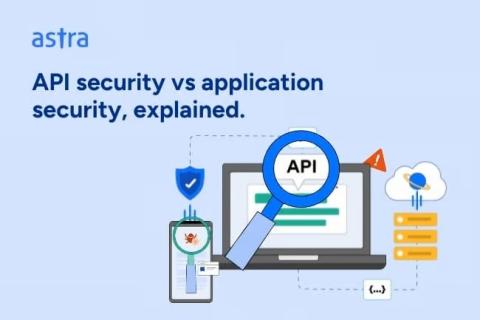
API Security vs Application Security: What's the Difference & Best Practices 2026

Over the past few years, APIs have quietly become the front door to your most critical data and workflows, flipping security ownership on its head. Accountability and ownership of both API and Application security have shifted from your central infra and network teams to product, platform, and engineering squads that ship new APIs every week, and well, sometimes every day. This is where CISOs and CTOs feel the tug strengthening from both sides.

Hackers hijack Google Smart Home #aisecurity #mcpserver

Building AI agents that can think, act, and adapt securely isn't easy. From prompt design to deployment, every stage brings new challenges and new risks. In this session, Bar-El Tayouri, Head of Mend AI at Mend.io, and Yehoshua (Shuki) Cohen, VP of Data and AI Evangelist at AI21 Labs, shared practical strategies for designing and defending agentic systems that actually deliver. Key topics covered: Originally recorded: October 29, 2024.

Learn How Veracode Helps Developers Deliver Fast Without Compromising Security with SVP Sarah Law

Hear from Veracode's SVP of Business Operations, Sarah Law, on how developers face immense pressure to deliver software quickly while security and compliance teams struggle to keep pace with constant changes. The Veracode platform addresses this challenge by discovering and organizing all technology assets across systems, then assessing the risk associated with each one. What sets Veracode apart is its built-in governance and unified, configurable policy framework that adapts to each customer's unique security posture and regulatory requirements.

Learn How Veracode Stops Attackers from Exploiting Vulnerabilities from Founder Chris Wysopal.

Hear from Veracode's Founder and Chief Evangelist, Chris Wysopal, on how attackers compromise organizations by scanning applications for vulnerabilities in code, APIs, mobile integrations, and cloud environments. Vulnerabilities enter systems through feature updates, open-source components, and third-party code—creating constant exposure.

Veracode: Automating Application Risk Management with Veracode CEO Brian Roche

Hear from Veracode's CEO, Brian Roche, on how organizations worldwide face mounting security risks from AI and applications but struggle to identify where those risks reside. Veracode's Application Risk Management Platform solves this challenge by helping enterprises focus on their most critical applications—the ones that would irreparably impact business if compromised. Through automated AI-powered vulnerability detection and remediation, Veracode enables organizations to dramatically improve their compliance from 30% to 90% with just a few clicks.

Mastering ASPM: Unifying Your Application Security Strategy

Application security is becoming increasingly fragmented. Development and security teams use a wide array of tools for testing, protection, and supply chain security. While each tool serves a purpose, they often operate in silos. This fragmentation creates a disconnected view of an organization’s security posture, making it difficult to prioritize and remediate risk effectively.

Master Your Application Security Risk with Veracode's Application Risk Management Platform

Discover how Veracode's Application Risk Management Platform transforms application security from a growing liability into a strategic advantage. Watch this video to learn how Veracode cut's through the chaos of expanding portfolios, AI-driven development, and vulnerable supply chains to deliver clarity, prioritization, and automated remediation.