Security | Threat Detection | Cyberattacks | DevSecOps | Compliance

Veracode CEO Brian Roche: How to Scale a Tech Company in the AI Era | Vlad Kachur Show Exclusive

How do you scale a world-class tech company while staying ahead in application security and AI-driven innovation? In this powerful exclusive interview on The Vlad Kachur Show, Brian Roche, CEO of Veracode, breaks down exactly how he transformed Veracode into one of the globe's leading application security platforms trusted by enterprises worldwide.

Application security in the age of AI with Farshad Abasi

Join us for this session of Defender Fridays as we explore application security in the age of AI with Farshad Abasi, CEO and Co-founder at Eureka DevSecOps. At Defender Fridays, we delve into the dynamic world of information security, exploring its defensive side with seasoned professionals from across the industry. Our aim is simple yet ambitious: to foster a collaborative space where ideas flow freely, experiences are shared, and knowledge expands.

How to Get Your Board to Care About Security (Before a Breach Forces the Issue)

If you’ve ever read one of those “Board Reporting Templates for CISOs” articles and thought, “Ah yes, surely my board will dedicate 25 minutes to my posture dashboard and ask follow-up questions about vulnerability backlog burn-down velocity,” then I have wonderful news for you: You have not met enough boards. Most enterprise boards don’t want a security dashboard. They don’t want posture metrics.

Why Claude Code Security Is a Big Moment for Application Security

Anthropic’s launch of Claude Code Security is exciting. Not because it changes everything overnight — but because it confirms something important: AI-powered security inside the developer workflow is becoming the new normal. And that’s a win for the entire industry.

The Myth of Self-Healing Code: Why Claude Code Security Isn't Replacing Application Security

Anthropic recently launched Claude Code Security, an AI-powered vulnerability scanner that can analyze your codebase, trace data flows across files, find bugs, and even propose patches. It represents a meaningful advance in how developers can get security insights earlier in the development process. But let’s be clear: this is not a replacement for a comprehensive application security program.

The Mobile AppSec Evaluation Guide for Security Leaders

Mobile security feels mature. Enterprises scan frequently, track findings, and report posture upward. Yet under regulatory scrutiny, cracks appear. This gap between perceived security and defensible governance is where mobile AppSec quietly fails. The illusion isn’t that security isn’t happening. It’s that it isn’t aligned with how regulated risk actually operates.

What is Slopsquatting? The AI Package Hallucination Attack Already Happening

Typosquatting, registering a typoed version of a popular package and waiting for a developer to accidentally type and install the wrong package, has been around for a decade in npm. It’s nothing new— the registry has protections for it. Then AI came along and changed everything again. Slopsquatting is the new, AI flavor of typosquatting. Instead of betting on human typos, attackers bet on AI hallucinations, the package names that LLMs confidently recommend that don't actually exist.

The Attackers Lens The Hidden Path To Largescale LLM Exploits

Mend.io, formerly known as Whitesource, has over a decade of experience helping global organizations build world-class AppSec programs that reduce risk and accelerate development -– using tools built into the technologies that software and security teams already love. Our automated technology protects organizations from supply chain and malicious package attacks, vulnerabilities in open source and custom code, and open-source license risks.

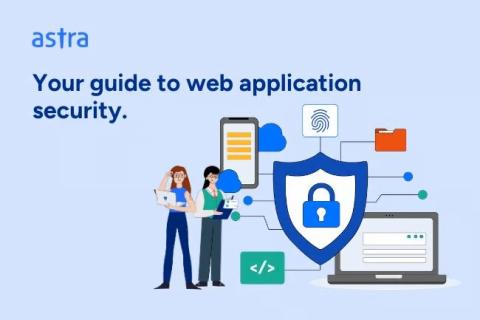
A 101 Guide to Web Application Security

Web application security is the prevention and protection of web applications through protocols and processes implemented to ensure a cyber threat and vulnerability-free web environment. Modern applications need to handle sensitive customer data, financial transactions, and proprietary business data, as most of the world has transitioned to digital business. As a result, these systems have been prime targets for various attackers seeking to exfiltrate data, disable services, or gain access to the systems.

Exploitability Isn't the Answer. Breakability Is.

Why don’t developers fix every AppSec vulnerability, every time, as soon as they’re found? The most common answer? Time. Modern security tools can surface thousands of vulnerabilities in a given codebase. Fixing them all would take up a development team’s entire capacity, often competing with feature development and other priorities.

From Acceleration to Exposure: Why AI Demands Mature AppSec

For most engineering teams, AI feels like a breakthrough years in the making. Code gets written faster, reviews move quicker, and releases that once took weeks now happen in days—or even hours. But as more of the software lifecycle becomes automated, a less comfortable reality is setting in: application security hasn’t kept pace, and AI-native security practices are often missing. When AppSec foundations are immature, AI doesn’t reduce risk—it scales it.

How MCP Servers Can Propagate Prompt Injection #mcp #promptinjection #aisecurity

Mend.io, formerly known as Whitesource, has over a decade of experience helping global organizations build world-class AppSec programs that reduce risk and accelerate development -– using tools built into the technologies that software and security teams already love. Our automated technology protects organizations from supply chain and malicious package attacks, vulnerabilities in open source and custom code, and open-source license risks.

Introducing Aikido Expansion Packs: Safer defaults inside the IDE

Developers work in a few core loops: writing code, committing changes, installing dependencies, and increasingly working alongside AI in the editor. Aikido Expansion Packs are built around those moments. They let you add focused security capabilities to Aikido that run locally, inside your IDE, and fit naturally into how developers already work. Each pack addresses a specific part of the workflow and does not require new tools, new pipelines, or new processes.

International AI Safety Report 2026: What It Means for Autonomous AI Systems

The International AI Safety Report 2026 is one of the most comprehensive overviews to date of the risks posed by general-purpose AI systems. It’s compiled by over 100 independent experts from more than 30 countries, and shows that while AI systems are performing at levels that seemed like science fiction only a few years ago, the risks of misuse, malfunction, and systematic and cross-border harms are clear. It makes a compelling case for better evaluation, transparency, and guardrails.

Best Cloud Application Security Tools: 10 Solutions for 2026

What is cloud application security? Cloud application security is the set of practices, tools, and policies that protect applications running in cloud environments across their entire lifecycle—from code development through CI/CD pipelines to production runtime. Unlike traditional perimeter security, it must protect multiple layers simultaneously: application code, container images, Kubernetes orchestration, and underlying cloud infrastructure under the shared responsibility model.

Building continuous compliance with Aikido and Comp AI

Compliance evidence only works if it reflects the current state of the system. At Aikido, we’ve always treated compliance as a byproduct of good security, not a separate exercise teams need to prepare for. That’s why Aikido integrates with multiple compliance platforms. The goal is simple: let teams use the security data generated in Aikido wherever they run their compliance programs, without changing how they work or maintaining parallel processes.

Breaking AppSec Myths - Obfuscated Packages

As part of the JFrog Security Research team’s ongoing work, we continuously monitor newly published packages across multiple ecosystems for malicious activity. This effort serves the broader open source community through public research disclosures, and it directly impacts the detection capabilities behind JFrog Xray and JFrog Curation. Our scanning pipeline uses a broad set of indicators to detect suspicious behavior.

Introducing Aikido Package Health: a Better Way to Trust Your Dependencies

Aikido Package Health surfaces the true health of an open source package with a single score. It helps devs understand stability, maintenance quality, and supply-chain risk before installing a dependency. Aikido Package Health is a public service that assigns a clear Health Score to open source packages. It gives you an honest signal about which dependencies are well-maintained and safe to adopt, and which ones might need extra scrutiny before you pull them into your project. The goal is simple.

Secure SDLC for Engineering Teams (+ Checklist)

The difference between a secure organization and a breached one depends on how well security is embedded into the Software Development Life Cycle (SDLC). Is security a built-in capability, or was it added after the core architecture was already in place? When it’s the latter, security is scattered and breaches happen.