Researchers at ESET describe various types of scams launched by users of Telekopye, a telegram bot that assists in crafting social engineering attacks. The scammers call their victims “mammoths,” so ESET has dubbed the scammers “Neanderthals.” The first type of scam is simply financial data theft via phishing sites.
New data sheds light on just how active the Initial Access Broker (IAB) business is, and the growth uncovered doesn’t bode well for potential victim organizations. There’s plenty of fodder in tech news about the use of IABs and their role in cyber attacks. But rarely do we get to see a more comprehensive analysis of just how much growth in both the number of brokers and posts of credentials for sale.
Another day, another warning about holiday scams! Lookout Inc., a data-centric cloud security company, is warning employees and businesses that phishing attacks are expected to more than double this week, based on historical data. With more corporate data residing in the cloud and a massive amount of employees still working remotely, mobile has become the endpoint of choice for the modern workforce.
The latest report from UK Finance paints a mixed picture of financial fraud in the United Kingdom, with losses exceeding £500 million in the first half of the year. However, amidst these concerning figures, there is a glimmer of hope as cyber fraud rates have shown a slight 2% decrease from the previous year.
Clark County School District in Nevada, the fifth-largest school district in the United States, recently experienced a massive data breach. Threat actors gained access to the school district’s email servers, which exposed the sensitive data of over 200,000 students. The district is now facing a class-action lawsuit from parents, alleging it failed to protect sensitive personal information and take steps to prevent the cybersecurity attack.
Today’s adversaries increasingly use compromised credentials to breach target environments, move laterally and cause damage. When attackers are logging in — not breaking in — legacy endpoint security offers little help in detecting and stopping breaches. Exacerbating the problem is an expanding attack surface, largely due to the growth of remote work and evolving supply chains.
In the current cyber threat landscape, where online security is paramount, the threat of session cookie replay attacks looms large. These attacks sidestep the conventional need for credentials and aim to hijack your online sessions, potentially compromising sensitive data and taking over user accounts. This blog post delves into the intricacies of session cookie replay attacks, shedding light on what they are, how they work, and the potential consequences they can unleash.
The massive uptick in QR Code phishing is an indicator that scammers are seeing success in taking victims from the initial attack medium to one under the attacker’s control. It’s usually bad when we compare one month or quarter to another and see an increase. But when it’s a single month compared to more than half a year, you know it’s REALLY bad. And that’s what we find in security vendor ReliaQuest’s latest blog covering how Quishing is being used.
In a supply chain attack, hackers aim to breach a target's defenses by exploiting vulnerabilities in third-party companies. These attacks typically follow one of two paths. The first involves targeting a service provider or contractor, often a smaller entity with less robust security. The second path targets software developers, embedding malicious code into their products. This code, masquerading as a legitimate update, may later infiltrate the IT systems of customers.
Rubrik has been assisting our customers with recovery from cyber attacks since 2018. We immediately took notice of these attacks, and early on, began developing processes and procedures to respond more effectively to better assist our customers. Our spirit of continuous improvement and execution of lessons learned from the field has led to a number of improvements to both our products and processes.
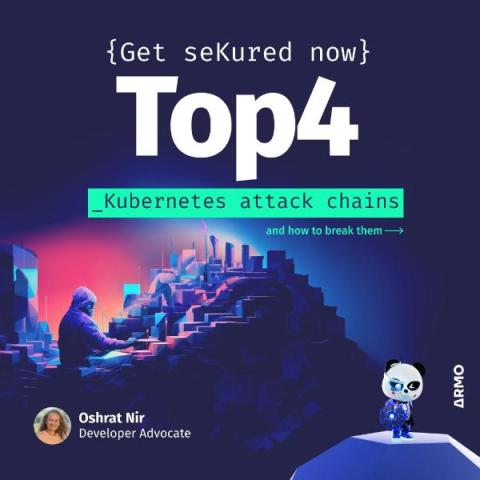
Considering the vast attack surface and flat network architecture, Kubernetes workloads are particularly susceptible to network-based threats. While following best practices like workload access controls, workload-centric IDS/IPS, and WAF can help prevent and block attacks, anomaly detection has become crucial in today’s IT landscape to proactively anticipate security threats.
On the 7th of November, Sumo Logic announced a security incident. Their security team detected the use of a compromised set of credentials to access a Sumo Logic AWS account. This Sumo Logic breach has had a downstream impact on users. Let’s get into the facts of what we know.
Distributed denial-of-service (DDoS) attacks have been around for a long time. However, the sophistication and scale of these threats has grown in recent years. Cybercriminals are employing amplification techniques that exploit vulnerabilities in misconfigured services or network protocols to increase the traffic they can generate and maximize the impact of their attacks.
Since Hamas’s attack on Israel last month, SecurityScorecard’s SecurityScorecard Threat Research, Intelligence, Knowledge, and Engagement (STRIKE) Team has paid close attention to hacktivist activity provoked by the conflict, with particular focus on the international scope.
Overall Analysis of Vulnerability Identification – Default Credentials Leading to Remote Code Execution During internal network testing, a document was discovered titled the “XL Security Site Administrator Reference.pdf.” It appeared to be a guide for the specific configuration of the SQL service running on NeuroWorks Natus. Being that this was a guide, it was extensive and detailed the software in-depth.
Spear phishing was the most common attack technique in the third quarter of 2023, according to researchers at ReliaQuest. “In Q2 2023, spear phishing-related techniques represented the three most observed methods of attack,” the researchers write. “This remained true in Q3 2023, accounting for a total of almost 65% of all true-positive incidents.
It’s unsettling to think that our systems can betray us. With SSRF attacks, harmless-looking web requests turn into weapons for cybercriminals. They can exploit vulnerabilities from within our networks, and these attacks often slip under the radar, quietly compromising data, breaching security, and potentially leading to catastrophic consequences. SSRF attacks have hit over 100,000 businesses globally since the end of 2022, and this number will rise due to the increasing use of web applications.
Mr. Cooper provides over 4 million people with mortgage lending options. They are the nation’s most prominent leading estate loan servicer, with over $900 billion in active service. The loan servicing giant recently experienced a technical outage; the culprit may have been a cybersecurity attack, potentially exposing the sensitive information of thousands.
As large organizations realize the likelihood of cyber attacks and improve their cyber readiness, small businesses are seeing increases not experienced by their larger counterparts. If I was to tell you that cyber attacks typically focus on larger businesses, you’d likely agree. After all, it just makes sense that the smaller the business, the likelihood that a cybercriminal’s earnings would be smaller. But, according to U.K.