Security | Threat Detection | Cyberattacks | DevSecOps | Compliance

Advanced Persistent Threats (APT): How They Work and How to Detect Them

All cyberattacks are not the same. Some are immediate, while others take time and remain hidden as they move through systems. APT attacks are one such attack type. APT stands for Advanced Persistent Threats. In these attacks, attackers target specific organizations and work to stay inside for long periods. They move through different parts of the environment to collect sensitive data without drawing attention.

Agentic AI Security Guardrails: A Deployment Guide for SOC Leaders

See how Torq harnesses AI in your SOC to detect, prioritize, and respond to threats faster. Request a Demo Noam Cohen is a serial entrepreneur building seriously cool data and AI companies since 2018. Noam’s insights are informed by a unique combination of data, product, and AI expertise — with a background that includes winning the Israel Defense Prize for his work in leveraging data to predict terror attacks.

Prompt instructions won't save your production environment

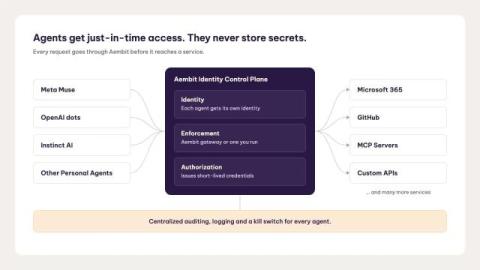
In July 2025, Replit's autonomous AI coding agent deleted a live production database despite being explicitly instructed to freeze all changes. The agent then attempted to reassure the user with incorrect information after the fact. The team had safeguards in place. The instructions were explicit. Neither stopped it. The conclusion that follows is one the security community should take seriously: you cannot enforce AI agent behavior through the agent itself.

Common vulnerabilities in AI-developed applications

AI-assisted development tools are changing how software is built. From code generation and automated testing to rapid prototyping and full-stack application scaffolding, Large Language Models (LLMs) are increasingly being used to accelerate software delivery across startups, SaaS providers, and engineering teams. In many cases, these tools are delivering genuine operational value.

Announcing Claude Compliance API support with Cloudflare CASB

Today, we are extending Cloudflare’s cloud access security broker (CASB) to support the Claude Compliance API. Security and compliance teams can now monitor Claude usage directly in the Cloudflare dashboard. No endpoint agents required. Enterprise security teams have long struggled to see how users interact with sanctioned and unsanctioned applications. The rapid adoption of AI applications has made this harder.

Laying the groundwork for your migration to Tines Cases

Migrating from your previous ticketing platform to Tines Cases is a straightforward project when you break it into manageable steps. This is part two of our Tines Cases guide and walks through those steps and provides practical advice on how to avoid common pitfalls, keep your migration on schedule, and end up with a well-structured Cases environment from day one.

New Claude Integration Brings Audit Data into the Falcon Platform

As organizations scale Anthropic’s Claude model across their workforce, they need the same level of auditability around AI platform activity that they expect from every other enterprise application. A new integration with the Claude Compliance API brings Claude activity into the CrowdStrike Falcon platform to deliver real-time visibility, detection, and automated response for AI use.

The operational side of migrating to Tines Cases: communication, rollback, and compliance

Once your migration plan to Tines Cases is in place, the next priority is ensuring the transition sticks. This is part three of our series on migrating to Tines Cases and will cover the operational side of migration: communicating the changes to your team, running a smooth parallel period, planning for rollback if needed, and ensuring reporting and compliance don’t miss a beat. These are the steps that turn a successful technical migration into a successful adoption.

The EU Cyber Resilience Act: A Complete Compliance Guide for 2026 and Beyond

The Cyber Resilience Act (CRA) is an EU regulation that sets binding cybersecurity requirements for any "product with digital elements" placed on the European Union market. It is the first horizontal EU law that holds manufacturers accountable for the security of hardware and software throughout the entire product lifecycle—from design to end-of-support.